Sure, everybody says you should start out with quartz, rose quartz, amethyst, citrine but what about for witchcraft and magic specifically. What stone carries the witchy soul? I will be listing some stones perfect for use in magick to aid and strengthen you.
You probably guessed the first one ;D
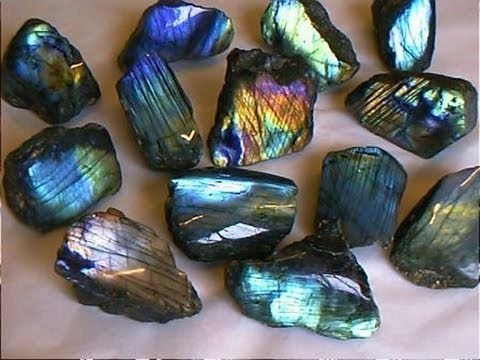
1. Labradorite
The Inuit people believe that Labradorite fell from the Aurora Borealis. Another legend claims that a warrior struck the stone with his spear creating the Northern Lights as a result.
This is a stone of magick, it is a stone for shamans, diviners, healers and people seeking knowledge or looking for guidance. Perfect for honing in your strength and power as a witch. Labradorite helps awaken physic abilities, strengthen intuition and create awareness. If you wear labradorite, it will help your innate magickal abilities rise to the surface.
This stone is the most protective stone you can get. It shields the aura and strengthens the energy within. It guards against negativity. Due to this, it is a difficult stone to use in black or negative magicks. Some say it is impossible. Because of it’s protective and shielding quality it is perfect to use when exploring alternate levels of consciousness and doing visionary explorations. This stone will keep you safe from all harm.
Labradorite is good for seeing past illusion and into the truth.
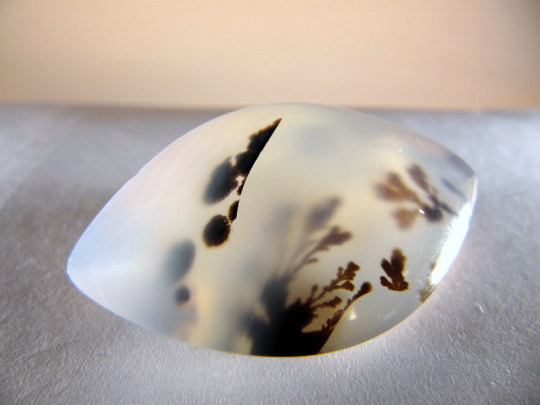
2. Dendritic Agate AKA Merlinite
Do not mistake with Mystic Merlinite. This is not the same.
This is another stone of pure magic! It is a stone of duality, of light and dark, black and white. It is the stone of good luck and the dark night of the soul.
It is said to be able to help the user recall memories of alchemists and even the great Merlin of Arthurian times (thus its name).
This stone attracts good luck and magick into the life of one who carries it. This stone is good for shadow work, allowing you to travel and see the deep dark parts of yourself. Merlinite, is a very shamanistic stone, aiding you to commune with the natural world and elementals and work with its energies.
It stimulates deep intuition and a psychic knowing. It helps to bring you in contact with teachers in other realms.
A stone of harmony it helps aid the birth of creativity. This stone is not only for the light aspects as it will allow you to see the reality of your own inner darkness.
Use this to bring balance to light and dark, masculine and feminine. Use it to balance any kind of duality.
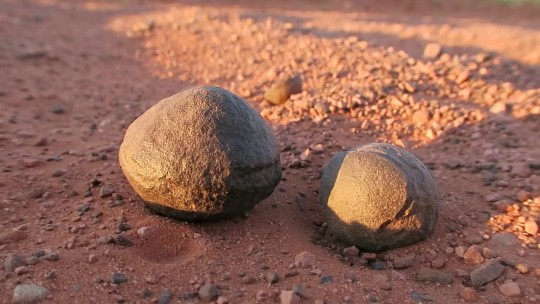
3. Moqui Marbles AKA Boji Stones AKA Shaman Stone
“Moqui” is the Hopi word for the dead. They say that the dead come around sunset to play with these stones.
This stone is believed to carry two genders, like animals and people. The flatter more oval ones are said to be male while the rounder ones are female. They are often used as pairs. They bring balance to the masculine and feminine energies inside all of us.
Use for inner transformational work. Use them for protection during journeying and out of body travel. These stones prevent negative entities from attaching to you.
These stones are perfect for overcoming fears of any kind, especially death.
They elevate your intuition and help you come in contact and communicate with spirit guides and totems.
Moqui Marbles also help you to become aware of parts of yourself that may be hidden including tendencies or habits that come from past lives.
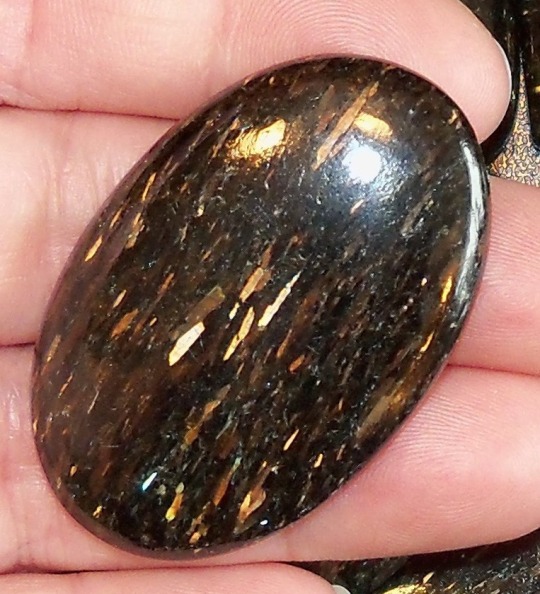
4. Nuummite
Nuummite is know as the sorcerer’s stone as it is a stone of sorcery and magick. It draws and combines the fiery energies of the earth with the energies of a raging storm.
Nuummite is the oldest stone on earth; it is approximately over 3 billion years old and has volcanic origins.
This stone is good for personal magick, increasing synchronicities and luck, clairvoyance and intuition. Nuummite allows for deep journeying into your psyche allowing you to see your true, authentic self- the good and the bad, the whole of you. This stone will bring you gifts of inner power and self mastery.
A great stone for grounding and highly protective, it shields the auric field and fiercely fends off against negativity, manipulation, and environmental pollutants.
Nuummite heavily draws from wild earth energies.
Be careful. This stone has intense energy and may be too much for some to work with. Nuummite is a strong magick stone and should be taken seriously and treated respectfully. Use with good intent as harmful intent rebounds on the user.
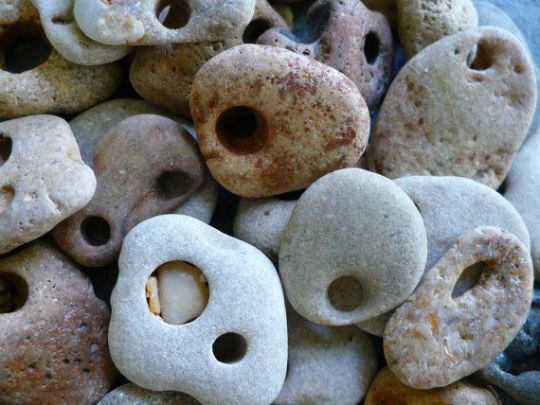
5. Hag Stones
These stones you can find around lakes, rivers, and creeks. They are natural stones with a naturally-forming hole (or holes) straight through.
Hag stones are believed to ward against evil, negativity, curses, illness and nightmares.
The holes inside the stones are used to look through and are said to help you see other worlds, spirits, and even fairies.
Hag stones can be used to enhance the magick abilities of anyone who uses it or keeps one on them. If you cannot afford any stone at this time, look for hag stones outside. They are powerful and have been held as sacred to many ancient Pagan religions for thousands of years.
Scientific Fact: Witches love crystals almost as much as they love jars. Consumerism Fact: In many metaphysical shops, nice-looking crystals can be had for relatively cheap. Ethical Fact: Many of those crystals are as cheap as they are because they are mined with no consideration for the damage done to the environment or the welfare of the humans collecting them.
So what’s a good, honest, ethically-minded witch to do, especially if he/she/they don’t have the money to afford crystals that were mined sustainably and responsibly, or the time to research which sellers obtain their wares from ethical mines?
Find their own.
I’ve been crystal hunting all my life, but only within the last year have I started doing it seriously. I’ve walked away from a creeking expedition with slabs of smoky quartz the size of my palm or calcite hunks bigger than my fist, and I personally think creek-crystal energy is much more vibrant and easy to work with; by comparison, the crystal points I’ve bought from metaphysical shops feel… inert, lifeless.
So let’s get straight into it!
What You’ll Need
a good-sized creek or stream with lots of gravel spits along its length
offerings to the spirit of the creek, if appropriate to your personal practice
bug spray, sunscreen, snacks, water, and anything else you’d normally bring on a hike
your trusty adventurer’s Bag of Holding
your sweet self
Now let’s talk details.
When I say “gravel spits”, this is what I’m referring to:
These tumbles of stone are going to be where you’ll find your treasures, and the size of the stones themselves actually tells you what size of crystal you might find: When the conditions are right (ie, during a flood), the water flowing through that portion of the creek is capable of lifting and moving rocks of the size you see there now.
In my experience, the crystal specimens you’ll find are typically half or one-third the size of the average rock on the spit. They’re usually larger than the smallest rocks, but much smaller than the largest rocks. Not always, though–I have found specimens larger. (See the introduction.)
Regarding offerings, if that’s part of your path, you’ll want to make sure it’s nothing that will harm the local wildlife or damage the ecosystem in any way. My personal go-to is water, ideally water from a bottle I haven’t drunk from yet.
In the same vein as offerings, I’ve had great success in making a sort of bargain with the spirit of the place: That in return for treasures, I will pick up and remove any litter I find in the area. It is, of course, always a good idea to remove any litter you see when you’re out in nature, but it doesn’t hurt to point out to the spirit of the place that it’s something you’re doing for it. Bring along a trash bag to help collect it.
Lastly, with regards to your bag, I would advise something with two shoulder straps. Rocks are heavy.
What You’ll Do
Once you’ve hiked to your creek and found a gravel spit with lots of good-sized rocks, it’s time to start looking. There’s two main approaches I’ve found that work well, and I tend to use both.
The first is a broad sweep. This one works best if you’ve got good lighting on the rocks. All you do is stand in one spot and sway side to side slightly while looking over the gravel, looking for anything that glints, shines, or otherwise catches the light shining on it. If you see something, investigate it. Repeat.
The second is the more detailed search. Get down on the ground–whether that means kneeling, crouching, laying on your belly, I don’t care–and go over each rock one by one. Use your eyes and use your hands. I imagine this method is probably going to be unpleasant for a lot of you, but honestly, it’s like crack to me.
Once you’ve combed over the current gravel spit as thoroughly as you please, pack up and move on to the next. Continue for as long as you like, or until you feel it’s time to go. Just remember that as far out as you go is how far you’ll have to walk back!
Advice and Warnings
Tell someone where you’re going and when you expect to be back. If you godsforbid go missing, they’ll be able to give the police an idea of where to start searching for your poor, lost ass.
Keep a charged cell phone with you at all times.
If you see something or someone iffy, do your best avoid it. Sometimes there are creepy people in the woods, and sometimes they do creepy things. Don’t get involved.
Make sure you’re not trespassing on private property. All of the creeks I hike on are on public land. If you’re in a state park or other protected environmental area, don’t go off the trail–you could cause damage to a fragile ecosystem.
Following the creek is a good way to get out and back without losing your way.
Don’t stray too far from it if you’re in unfamiliar territory.
The best times of year to go hunting–assuming Northern Hemisphere, a temperate climate and deciduous forests around the creek–are the spring and summer. In the autumn, you’ll have to clear fallen leaves off of the gravel before you can look, and winter is too cold.
The best time of day is the morning, when the sun angle is lower and is more likely to glint off of shiny rocks.
You’ll have your best luck the day after heavy rain. Rain will swell the stream and shift the stones around, and could uncover new treasures!
Inspect anything that looks even remotely worthwhile. You’ll find a lot of duds, sure, but that will help train your brain to tune out what you don’t care about finding.
“What Can I Find?”
Exactly what sort of minerals and crystals you’ll find is highly variable. All minerals are not equally distributed across the planet, because many of them require very different conditions to form and the crust composition varies slightly from place to place. However, there are some stones that are pretty common all over the Earth, so no matter where you go hunting, you’re likely to find them.
Of course, for more specific identifications, please consult the internet, a book on mineralogy, or your local rockhounding club.
Quartz
The chemical formula of quartz is SiO2, or silicon dioxide. Silicon and oxygen are, by mass, the two most abundant elements in Earth’s crust; around 90% of it is composed of silicate minerals like quartz. Ever find a pretty, sparkly, mostly-clear rock on the ground? It was probably quartz.
Quartz comes in a mind-boggling array of colors, from smoky quartz so dark it’s practically opaque to purple-and-orange ametrine to the brilliant clear of a Herkimer diamond (yup, not actually diamonds) but all of these varieties are still quartz. In my region of North America, clear and smoky quartz seem to be the most plentiful.
Calcite
Calcite is calcium carbonate, CaCO3. Like quartz, it is made of some of the Earth’s most abundant crustal elements (in this case, calcium and oxygen) and comes in a stunning array of colors. In my creeks, I’ve found calcite in yellow, orange, white, and even blue and red.
The biggest giveaway for rough calcite is its texture. If you pick up a rock and it feels like someone rubbed wax all over it, you’ve probably got yourself a calcite specimen.
Feldspar
Feldspar is one of the most abundant minerals in the crust, alongside quartz. It’s also a silicate, and it frequently finds its way into other minerals, such as granite.
What sets feldspar apart from the other two minerals I’ve mentioned here is its fracture habit: It naturally fractures along cleavage planes which intersect at 90-degree angles. It doesn’t shatter–it shears. If you find a rock with a smooth face that looks like a polished stone countertop, it’s probably feldspar.
“But Bear, I Want Crystal Points!”
Oh. Yeah.
You can find those too.
Every one of those pictures is of quartz points that I have found in my area. (In fact, they’re actually all from the same crystal-hunting hike, and represent only about a third of the specimens I found that day!) As you can see, they aren’t all perfect–and I have plenty of others that are, like, three facets and no point–but they’re all beautiful, and some of them really sing, if you know what I mean.
Conclusion
Finding your own crystals can be pretty simple, when you get down to it. It can be a lot of fun to get down and dirty, and is a great way to get yourself out in nature for a while. And, of course, you can rest assured that your crystals were gathered in a sustainable, respectful, ethical manner–assuming you took care of yourself and the environment while finding them!
Below is a list of helpful terms to know when working with gems and minerals. It includes terminology on various crystal shapes and forms. Terms specific to mineral shapes have “(form)” next to them for ease of reference.
Abundance (form): An abundance crystal consists of one long quartz crystal with many small crystals clustered around its base. Its function is to attract wealth and abundance.
Adamantine Luster: A particularly brilliant shine as shown by a specimen such as a diamond.
Amorphous (form): Amorphous crystals, such as obsidian, have no particular shape. Energy flows rapidly through and amorphous crystal as it has no rigid internal organization.
Aura: The subtle bio-magnetic sheath that surrounds the physical body, providing a protective zone that extends for about 18 inches to 3 feet from the body and contains information about a person’s physical, mental, emotional, and spiritual state of being.
Aura Crystal: A crystal specimen, usually of the quartz variety, that has been coated with metal (i.e. gold, titanium) in a vacuum chamber resulting in an iridescent sheen.
Ball (form): Balls are usually shaped from a larger piece of crystal and may have planes or flaws within them. They emit energy in all directions equally.
Barnacle (form): A barnacle crystal has many small crystals covering a larger crystal.
Bridge (form): A bridge crystal grows out of another larger crystal. It assists in bridging gaps and bringing things together.
Carat: The standard measure of weight for precious stones and metals. A carat is equal to 0.007 oz (0.2g).
Cathedral Quartz (form): Cathedral quartz may appear to be composed of several convoluted pieces, but these are in fact all part of the main crystal which has multiple terminations with at least one point at the apex.
Channeler (form): A channeling crystal has a 7 sided facet at the front of the termination and a triangular face on the opposite side. It channels healing energy or information from higher sources.
Cleavage: The way a mineral or rock breaks along a certain plane, or in a certain direction.
Cluster (form): A cluster has many points bedded, but not necessarily fixed, into a base. The crystals may be small or large.
Companion (form): A companion crystal has two crystals entwined and partly growing in each other, or a small crystal that grows out of the main crystal.
Cross (form): A cross formation has one crystal at right angles to another, usually larger crystal.
Crystal: A naturally occurring substance whose atoms are arranged in a regular manner.
Crystal System: The systems in which crystals are grouped based on their symmetry. There are 6 crystal systems: cubic, monoclinic, triclinic, trigonal/hexagonal, orthorhombic, and tetragonal.
Diamond Window (form): Flat faces at the top of crystals are called windows. A diamond window is large and connected to the apex and the base.
Double Terminated (form): A crystal with two naturally faceted ends.
Dull Luster: A shine that reflects very little.
Earthy Luster: A non-reflective mineral luster.
Egg (form): A crystal cut in the shape of an egg.
Elestial (form): An elestial has many natural terminations and folds over a multilayered crystal.
Etched (form): An etched crystal that looks as though hieroglyphs or cuneiform writing has been inscribed on its faces.
Faces: The External flat surface that make up a crystal’s shape.
Fault Line: An inner flaw or break in a crystal that refracts light and appears to divide the crystal into sections.
Fluorescence: The optical effect whereby a mineral appears a different color in ultraviolet light than in ordinary daylight.
Fracture: The distinctive way a mineral breaks.
Friable: Minerals that easily crumble are referred to as friable.
Gemstone: A mineral, usually crystal-like, which is valued for its color, rarity, and hardness.
Generator (form): A generator crystal has six facets meeting equally in a sharp point.
Geode (form): A geode is contained within an outer form. When opened, it is hollow with many crystals pointing inward.
Geologist: A scientist who studies the Earth and its structure and composition.
Gridding: The placing of crystals around a building, person, or room for protection or enhancement energies.
Habit: The general shape of a mineral.
Inclusion: Any material that is trapped inside a mineral during its formation, often producing a rainbow.
Iridescence: A play of colors that looks like oil on water that occurs when light reflects off internal elements of a rock or mineral.
Layered (form): Plate-like crystals such as lepidolite are referred to as layered.
Luster: The way in which light reflects of the surface of a mineral.
Manifestation (form): One or more small crystals are totally enclosed by a larger crystal.
Matrix: The bedrock on which crystals are formed.
Metallic Luster: A shine like that of polished metal.
Mineral: A naturally occurring solid with specific characteristics, such as a particular chemical composition and crystal shape.
Mineralogist: A scientist who studies minerals.
Mohs Scale: A scale of hardness used in classifying minerals. It runs from 1 to 10 using a series of reference minerals, and a position on the scale depends on the ability to scratch minerals rated lower.
Occlusion: A mineral deposit within a crystal, which usually shows up as cloudy patches, spots, or a ghostlike image depending on the color of the material.
Opaque: A substance or material that does not let light pass through it.
Ore: A rock or mineral from which metal can be extracted
Phantom (form): A phantom crystal appears ghostlike within the body of a larger crystal.
Pleochroic: In a crystal, appearing to have two or more different colors or shades of color, depending on the angle from which it is viewed.
Point (form): Points may be natural or artificially shaped. A single crystal point has a faceted pointed end and the other end tends to look ragged where it has been separated from a cluster base.
Prism: A solid geometric figure with a set of faces parallel to one another.
Pyramid (form): A crystal with four sides on a base, but the base itself may be squared off if the crystal is natural (i.e. apophyllite) rather than artificially shaped.
Record Keeper (form): A record keeper crystal has clearly etched pyramid shapes on its side or sides.
Resinous Luster: A shine like that of resin.
Scepter Quartz (form): A scepter quartz is a large central rod around one end of which another crystal is formed.
Seer Stone (form): A seer stone is a natural, water polished stone that is cut to reveal an inner world.
Specific Gravity: The ratio of a mineral’s weight compared to the weight of an equal volume of water.
Square (form): A square crystal consolidates energy within its form. It’s useful for anchoring intention and grounding.
Streak: The color of a mineral’s powder. It is less variable than the color of the mineral, so is a more reliable identification tool.
Striation: One of multiple, usually parallel grooves or scratches on a rock surface, produced by abrasion associated with glacial movement, stream flow, a geologic fault, or meteoric impact.
Tabular (form): A tabular crystal has two wide sides resulting in a flat crystal which may be double terminated.
Transmitter (form): A transmitter crystal has two seven-sided facets with two perfect triangles between them.
Tumbled (form): Refers to stones that have been polished in a large drum with grit, resulting in a smooth and often shiny stone.
Vitreous Luster: A shine like that of glass.
Vogal Wand (form): A crystal with specially created, indented facets with specific angles down the sides of a quartz wand.
Wand (form): A crystal in the shape of a wand, either naturally occurring or artificially cut.


 teakepp