Sigils are a very popular technique across Tumblr from chaos magick, and innovative sigil designers are always coming up with new ways to create them. While sigils are easy to learn how to use and can be extremely effective, it’s another Western magical method. It left me wondering if there’s an Afrocentric alternative for us black witches, rootworkers, and conjurers!
Magical Symbols in Vodou and Hoodoo
It would be remiss not to mention some of the symbol systems already existing in Africana magical traditions. In the African traditional religion of Vodou, which has its own magical practices, the spirits/deities called lwa represent different powers, personalities, and energies that can be represented visually through veves. Veves are sometimes used by magical practitioners to call upon lwa to help with spells or rituals. The issue with using veves as a sigil alternative is that they belong to the religion of Vodou, require a sufficient knowledge of the lwa, and should not really be used without the proper training and/or necessary initiation into Vodou from a qualified Vodou practitioner.
So what about hoodoo? Many rootworkers influenced by Jewish Kabbalah and Christian ceremonial magical traditions drew inspiration from texts like the Greater and Lesser Keys of Solomon. So using Solomonic pentacles and complex magical symbols of that nature are also well within the general hoodoo repertoire. The thing is, sure that’s a genuine part of African-American folk magic, but it’s still imported from European traditions and has no connection to our ancestors outside of a colonial context.
Introducing… Adinkra Symbols!
So in the running for an Afrocentric sigil alternative that many people of African-descent can easily use and access, that leaves veves out for being part of an initiatory-only religion that requires in-person training and leaves Solomonic designs out for being Eurocentric. Hoping to fill this gap somehow, I thought about back when my fiancé got his first tattoo, which I proudly drew the design for! It was of the West African symbol called the Wawa Aba. You may have seen it on Wakandan Princess Shuri’s t-shirt, which is what got me thinking…
Look at this genius princess wearing the Wawa Aba with grace!
I researched the Wawa Aba further and discovered it’s one of dozens of Adinkra symbols, which are a part of the Ashanti and Baoules cultures of West Africa. They are used as cultural symbols and sometimes for ritual purposes too. You can find Adinkra symbols used extensively in fabric, pottery, architectural, t-shirt, and jewelry designs. Historically, special Adinkra clothes were only worn by royalty or spiritual leaders on special occasions, but nowadays Adinkra designs are mass-produced due to tourism.
Each Adinkra symbol has a rich set of meanings and associations, and many are linked to proverbs or wise sayings. They are a great alternative for Afrocentric folks who don’t want to rely solely on Western sigil techniques because these symbols have traditionally been used for magical purposes within their original cultural contexts but are safe to incorporate into your magical practice without culturally appropriating if you’re a person of African descent. (This is what I’ve gathered from my own research on Adinkra symbols, but of course, if I’m mistaken about anything, please correct me!)
Using Adinkra Symbols in Your Craft
So here’s just a few of the many Adinkra symbols you can incorporate into your magical practice as a black witch, rootworker, or any other kind of Afrocentric magic user! Please don’t use these if you aren’t a person of African descent.
Possible Ways to Use Adinkra Symbols:
– Write them on petition papers or name papers
– Carve them into the sides or on the bottom of a spell candle
– Arrange roots and herbs into the shape of a symbol
– Draw them on the lid of a spell jar
– Write them on slips of paper stuffed into a mojo bag
– Stir the surface of the water in the shape of the symbol for a spiritual bath
These are just some suggestions for how to use Adinkra symbols, but feel free to reblog with ideas of your own! I’ve included several below to help get started. All images below came from Adinkra.org, where you can find more of the symbols and their meanings.
In my Hindu project based on the reincarnation of Hindu God and Goddess the women characters have the spirit, love, passion and strength for one another to defend what is right and each other.
1. Durga and Lakshmi
2. Kali and Parvati
3. Saraswati and Hanuman
the rest are concept art of certain characters. hope you enjoy!
please be respectful of cultural boundaries when working with mermaids from various cultures and traditions, and be mindful not to intrude.
🌊 Rusalkas – slavic in origin, disturbed spirits of the “unclean dead”, ghosts of women who died violent deaths, with a penchant for drowning young men. they live only in rivers and lakes, and are known to have green hair like aquatic plants, only appearing in the night.
🌊 Melusina – a mermaid that walks among humans, but returns to their two-tailed form during baths and when they bathe their children. often a water spirit of a nearby lake or river. french origin.
🌊 Siren – greek mythology. servants and companions of persephone, whom searched for her when she was abducted. they are known to sometimes have the body of a bird, and for their song, which lured sailors to their doom. cannibalism implied folklore. have the power of prophecy.
🌊 Merrow – irish mermaid. known to have green hair and webbed fingers. particular noted love of music and their red cap, which when stolen, they will live with the thief until they find it, and then return to the water, leaving even a whole family behind.
🌊 Ben-varrey – from the isle of man, known to bless those that are kind to them with prosperity, gifts, and even the location of treasure.
🌊 Aicaya –
Caribbean mermaid, humans who become mermaids when they are shunned from their community and go to live in the sea.
🌊 Amabie – japanese merpeople, with birdlike torsos and three legs and scales. they are gifted with prophecy, usually foretelling abundant harvests or epidemics
🌊 Ningyo – “human faced fish” known to have golden scales, that brings bad weather and misfortune when caught, but when their flesh is eaten the consumer is granted youth and beauty, even agelessness.
🌊 Finman / Finwife – magical shapeshifters that disguise themselves as sea creatures or plants to lure humans, unlike most mermaids they kidnap people from the shores to be their spouses or servants. they have a greed for jewelry and coins, particularly silver, and prefer humans over other finfolk.
🌊 Sirena Chilota – considered the more friendly mermaids, caring for all fish life and rescuing drowned sailors to restore life to them. known for their human-like beauty and youth, according to legend they are the child of a human and a “king of seas”, tears are a powerful substance. from chilote mythology.
🌊 Cecealia – sometimes known as “sea witches”, they are half human and half octopus. origins in native american and japanese mythology.
🌊 Sirena / Siyokoy – the philippine version of mermaid and merman respectively. also called “magindara”, they are known to protect the waters from raiders, and protect the boy moon from sea monsters. Siyokoys can sometimes have legs however, covered with scales and webbed feet
🌊 Sea Mither – scottish/orcadian mythology, a spirit that personifies the sea during spring and summer, battles along scottish isles using storms to bring the summer about. a mother figure to all aquatic life.
🌊 Ceasg – a fresh-water mermaid, specifically half-salmon, said to grant three wishes if captured. sometimes called maighdean na tuinne (maid of the wave) or maighdean mhara (maid of the sea). scottish.
🌊 Selkie – though somewhat different from the typical mermaid, as they are not cold-blooded, have the body of a seal in the water and are human on land. in legends their skins are often stolen and they are kept by fishermen as spouses, or become lovers to fishermen’s wives who shed tears into the sea.
Either a Melusina or Sirena Chilota ❤ How about you?
where the sea meets the shore is your domain; and where the sea meets the sky also. walk the pathways of light over water. let the mists roll out of your hands until they’re so thick you can touch them. play tricks; play games; give a home to monsters and misfits. and when the seas grow stormy, do not fear–for, son of the sea, the ocean could never harm you: there are tides in your blood.
I learned in a Latin Studies class (with a chill white dude professor) that when the Europeans first saw Aztec cities they were stunned by the grid. The Aztecs had city planning and that there was no rational lay out to European cities at the time. No organization.
When the Spanish first arrived in Tenochtitlan (now downtown mexico city) they thought they were dreaming. They had arrived from incredibly unsanitary medieval Europe to a city five times the size of that century’s london with a working sewage system, artificial “floating gardens” (chinampas), a grid system, and aqueducts providing fresh water. Which wasn’t even for drinking! Water from the aqueducts was used for washing and bathing- they preferred using nearby mountain springs for drinking. Hygiene was a huge part if their culture, most people bathed twice a day while the king bathed at least four times a day.
Located on an island in the middle of a lake, they used advanced causeways to allow access to the mainland that could be cut off to let canoes through or to defend the city. The Spanish saw their buildings and towers and thought they were rising out of the water. The city was one of the most advanced societies at the time.
Anyone who thinks that Native Americans were the savages instead of the filthy, disease ridden colonizers who appeared on their land is a damn fool.
Makes me happy to see people learn about the culture of my country 😀
Also, please remember that the idea of a nomadic or semi-nomadic culture being “less intelligent”, “less civilized” (and please unpack that word) was invented by people who wanted to make a graph where they were on the top.
Societies that functioned without 1) staying exclusively in one location or 2) having to make complicated, difficult-to-construct tools to go about their daily lives… were not somehow less valid than others.
**ON STONES : SOME PIECES OF ADVICE & LORE FROM FRENCH TRADITIONAL WITCHCRAFT**
French soil is rich and diverse because of the variety of landscapes the country provides. Sea, sand, extinct volcanos and green mountains flourish along forests, arid countys and rocky plains. Snow, ice, sun and rain molded the geological aspects of the territory and shaped the land we know today. Gemstones and semi-precious crystals are abundant, but before even starting to consider dwelling in those, there also exist a few rocks, pebbles and stones that various countryside witchcraft practices recognized and used long ago. Here follow a few of them.
MYTHICAL ORIGINS
It is said that underground currents and flows merge to form a great serpent. This serpent sometimes arises, unearthed, where lie sacred wells and springs, thus giving them great healing virtues. The serpent dug caves for fairies to dwell in (we French people believe fairies to reside in grottos : many regions have their own « Grotte des Fées »); then for Men to live and inhabit. Its head is stud with bright shining gemstones, its body set with marvelous crystals with vibrant colors and powerful properties. The serpent is a mythical guardian, and the first, primitive and primal Genius Loci.
Stones store the virtues of the spirit inhabiting the land they dwell on.
GREAT STONES
Menhirs and dolmens still draw people today, weither for pilgrimage or individual quests. They were considered gatekeepers of the underworld. They are mostly known for the healing rituals and other transfer medicine they convey. Other uses include fecundity rites where women would come to rub their genitals on the most phallic parts (the Pierre Piquée, Aubière, Puy-de-Dôme).
Wobbly stones were used to baptize children : one would leave the newborn child at the basis, then shake the stone to gift them with strength, happiness and protection. Some say stones were able to move on their own accord, adding an extra blessing to the rite.
HOLED STONES
Known as hagstones in the Bristish Isles, French people name them « pierres trouées », « pierres à cupules », « pierres à empreintes ». These are stones naturally pierced with a hole by water (mostly rain and saltwater). They are powerful healing allies (fever, afflictions from the eyes, sterility, skin disease, etc). With stones large enough, placing the body part in need directly inside the hole – the head, a limb, a finger, was said to cure anything form intellectual deficiency to sprains and warts.
These stones are said to bear the marks of spiritual beings such as angels, demons, mythical heroes, giants (Gargantua) or saints.
DOMESTIC STONES
This witch comes from the Alpine regions, where one is able to dig up their own quartz in the mountains or drag the rivers to discover large pieces of quartz with diverse inclusions (sometimes even finding gold, if the Dame Blanche – White Lady – don’t catch you first). Once, in Marseille, I managed to unearth big chunks and nuggets of smoky quartz the size of my palm while hiking on an inlet. It is said quartz comes from the old glaciers around : these are pieces of ice so ancient it doesn’t melt anymore.
When I was a child, I also spent hours looking around for small, shiny white stones : they were said to be « pierres de lune » (proper moon stones) that cracked and felt directly on Earth for us to find if we were lucky enough. I was thrilled to own myself a very small part of the Moon and treasured my discoveries.
One of the most popular stone is the well-known « pierre à venin » (venom stone) – either granite, quartz or variolite, sometimes schist or limestone. These are small black stones with green stains. They come from various fossils, prehistoric tools or natural stones and are also called « pierres-serpent » (snake stones) or sometimes « pierres de salamandre » (salamander stone). One would need to polish them on sheep skins before using them. They were said to be body parts belonging to old big reptiles, snakes and other venomous beings long gone – for example, urchin fossils were known as « œuf de serpent » (snake egg). Some village practitioners also claim to find them in viper nests, or in places where snakes would fight – thus making the stone a stone made from the snake’s slime. The snake would dribble and roll the stone with its body when fighting, giving it its round, spherical shape.
One would keep their stones in jute bags or store them in terra cotta (clay) containers.
Uses : Great for snake bites, bug stings and skin diseases. Leave the pierre à venin in water for anywhere between half an hour to a full day, then drink half of it and pour the remaining water on the affected body part to cure the disease away. They were also hung on beasts (cattle, dogs, cats…) to protect them.
The « pierre de crapaud » (toad stone) is named after its shape and color making it look like a toad. Some say you could find it inside the toad’s head, some say it is the toad brain. Used just like the pierre à venin, but dry, by rubbing the stone on the needing area.
The « pierre des yeux » (eyes stone) is a stone found in swallows nests. It can cure any eye disease.
The « pierre du sang » (blood stone) is a red-colored pebble used to stop haemorrhagies and other blood problems by direct application.
The « pierre de la Croix » (Cross stone) is a flat gray pebble where you can see a white pattern evoking the Cross. These were especially popular in Bretagne and Auvergne, and were known as powerful talismans. They protect their bearer from the evil eye, nocturnal fears, spellcraft, and can also cure one from haemmorhages, diarrhea and rabies.
The « pierre des femmes » (women stones) are limonite nodules known to help women in labour, quickening the delivery, but interestingly enough they were also used, if combined with the right sacred plants, in abortiveritesandpreparations.
Other stones also include the « pierre de la tête » (head stone, used against migraines – often quartz pebbles); « pierre de la peste » (plague stone, a black pebble); « pierre des dents » (teeth stone) or « pierre des cauchemars » (nightmare stone, holed silex hung on the bedroom doors or put under the bed to prevent bad dreams).
***
(Appreciatively sourced from BERTON H., Sorcellerie en Auvergne, Éditions De Borée, 2003)
Nuestra Señora de la Santa Muerte (Spanish for Our Lady of Holy Death), often shortened to Santa Muerte, is a female deity or folk saint in Mexican and Mexican-American folk Catholicism. A personification of death, she is associated with healing, protection, and safe delivery to the afterlife by her devotees. Despite condemnation by the Catholic Church, her cult has become increasingly prominent since the 2000s.
The worship of Santa Muerte is condemned by the Catholic Church in Mexico as invalid, but it is increasingly firmly entrenched in Mexican culture.
Santa Muerte is also seen as a protector of homosexual, bisexual, and transgender communities in Mexico, since many are considered to be outcast from society. Many LGBT people ask her for protection from violence, hatred, disease, and to help them in their search for love.
Beyond offerings carrying a pleasing smell to the Gods and being a physical manifestation of our devotion, they are a place of meeting and connecting with the divine. Eating together, in the ancient Greek worldview, was a way of strengthening communal bonds. We share the same food; we are nourished by the same thing; we are a community. The same goes for drinking – libations (sponde) were shared at parting ceremonies and at the conclusion of treaties. Both parties would drink together to seal their friendship. And since the Gods were (and are) part of the community, they got a share too. Making offerings to them, then eating our share, connects us to them and shows that we belong to them, and they to us – we are in this together.
It’s not a coincidence that ritual feasting holds an important place in almost every religion – from Catholic communion to Muslim Eid al-Fitr to the 3000-year-old Hittite feast celebrations I worked on this semester. Whatever the religious beliefs behind the ritual or festival, eating together brings us closer to our deity/deities, and to each other.
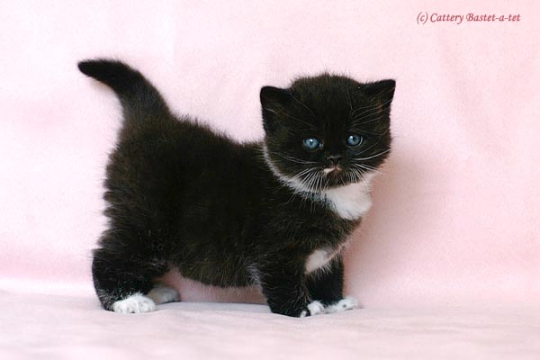
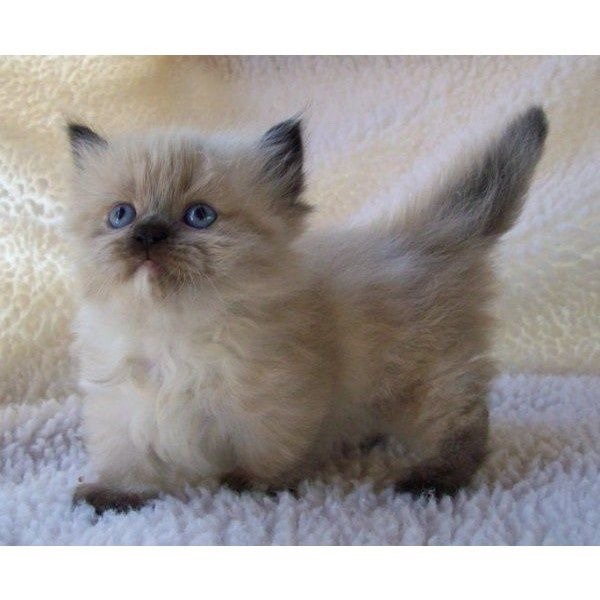
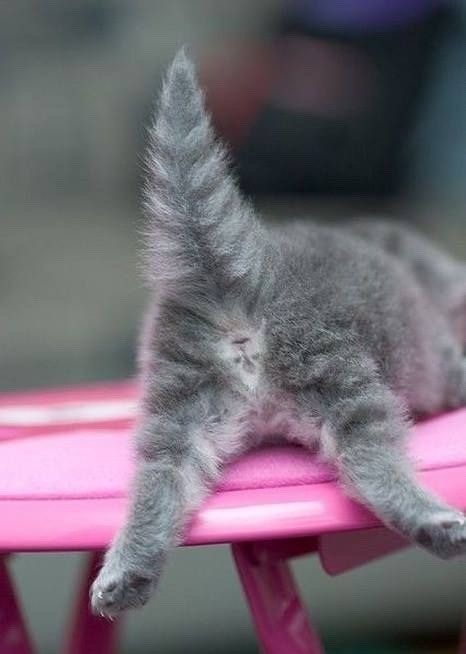
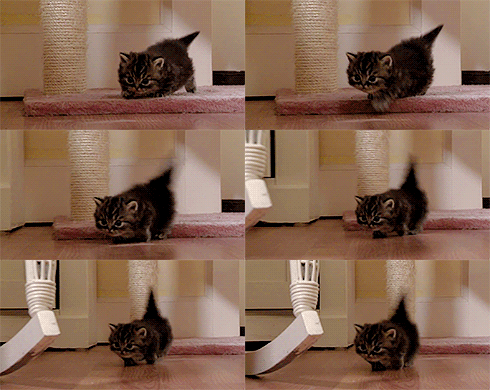
In Austria, we call kittens at that age “Autodromkatzerl”, which translates to “bumper car kittens”, because of the way their tail sticks up. It’s not a really common word, but a very cute one, I think
this is a genuinely delightful bit of knowledge, thank you for sharing this!! omg
I just did a quick perusal of the Coptic resources on this site, and it has all the resources I’ve personally found worthwhile and then some. These are resources that took me months, if not years, to discover and compile. I am thoroughly impressed. The other languages featured on the site are:
Akkadian
Arabic
Aramaic
Church Slavonic
Egyptian (hieroglyphics and Demotic)
Elamite
Ethiopic (Ge’ez)
Etruscan
Gaulish
Georgian
Gothic
Greek
Hebrew
Hittite
Latin
Mayan (various related languages/dialects)
Old Chinese
Old English
Old French
Old Frisian
Old High German
Old Irish
Old Norse
Old Persian
Old Turkic
Sanskrit
Sumerian
Syriac
Ugaritic
For the love of all the gods, if you ever wanted to learn any of these languages, use this site.
Likely helpful for various recon-oriented polytheists.





 teakepp