it’s worth it. for both you and your players, but especially for new players who can see the game in different ways than you
examples I’ve written that you should feel free to use:
-orcs: rather than give in to the weird “tribal savages who fight all the time,” consider connecting orcs and their inate strength/constitution to the earth. in my most recent campaign setting, orcs are descended from a human champion who bested an earth primordial; the primordial, impressed with their strength, blessed them and their descendents with powerful tusks and a greater constitution.
-drow: instead of the entire drow narrative being “they’re dark skinned and bad because they betrayed the fair skinned elves and their gods,” consider playing up their connection to spiders. perhaps they worshiped a spider God who gave them the ability to blend into their darkened surroundings. if you’re married to their current aesthetic appearance, take care to present multiple drow societies that have different outlooks; not a homogenous race of black skinned slavers. consider pigmentless drow, who’ve lost all skin color because they never see the light of day. drow who use echolocation? distancing your drow from the bad connotations carried by the current zeitgeist is a useful endeavor
-include elves of color in your game
-drop the ‘tribal’ aesthetic and the connotations that goblins and other monstrous races have. it’s lazy (note, tribes and other similar social structures are still perfectly valid social structures; but if the only example of them in your game world is the violent, monstrous people who seek to destory “civilized communities” that sends a bad message about real life tribes and their validity
-focus less on race and more on societies; a society can be evil or good, but a race cannot
-consider that fantasy races have no reason to conform to any gendered structures (especially our current human binary). dwarvish societies who express their varied and fluid genders through beard braiding. elvish societies who reproduce asexually. don’t limit yourself to what you can relate to from a 21st century human perspective
it takes a bit of elbow grease to decolonize your d&d, and the process is never done, but in my own experience, it’s only ever lead to more innovative and engaging experiences!
The world’s tiniest dragon must defend his hoard, a single gold coin, from those who would steal it.
Suggestion: The dragon’s definition of “steal” is somewhat loose. It still allows the coin to be used and bartered and change hands–but on one condition: the dragon must be with it at all times.
They become a familiar sight in the marketplace.
“Here’s your change, ma’am. One gold piece.” The merchant holds out a palm, on top of which rests a tiny, brilliantly colored creature clutching a single gold coin.
“That’s a dragon,” you say dumbly. “One piece… and a dragon.”
“Yes.”
You cautiously reach out and attempt to take your change. You tug. It holds. You tug harder. The dragon lets loose a tiny, protective growl.
“Ma’am–no, ma’am, you have to take the dragon, too.”
“Sorry?”
The seller notes your dubious expression. “Not from around here, are ya?” They shrug. “Them’s the rules. Take the coin, take the dragon.”
They wait expectantly. Wondering how the world has so suddenly gone mad, you slowly, slowly hold out your hand.
The dragon perks right up. It scampers from their palm to yours with the coin clamped in its jaws and scales your sleeve with sharp little claws.
“Have a nice day, ma’am,” the merchant says. “Spend him soon, now, you hear? At another booth, if you can. He likes to travel.”
From its perch upon your shoulder, the dragon lets out a happy trill.
Bonus: the coin eventually passes to the rogue in a group of travelling adventurers. The dragon becomes the mascot of the entire group, and they lay out a small pile of coins for him to sleep on every night, clutching his coin like a teddy bear.
^^^ adorable.
The coin is placed in people’s hats, the dragon riding comfortably on top and trilling at the places it sees. When the rogues reach markets, they offer the dragon the choice of the coin being traded, but instead the dragon scampers back with it to comfortable places among them all, cheerfully trilling as they bring the change they get back for its inspection.
I made a little packet/handout for people who find the Player Handbook’s explanation of filling out character sheets with stats. Apologies for any typos!
Feel free to message me with corrections or suggestions for improvements.
Playing in an ‘into the Abyss’ campaign, so what do i do? make this pastel monster. Trickery cleric, they had me at light clones. majority of things that Thistle says is a lie, thistle isn’t even a real name.
Actually a child, who is going to hit a child? so far grey dwarfs, grey dwarfs will hit a child.
subconsciously stole Pearl’s pallet, was wholey unintentional. i swear.
My cleric half-elf dnd character, Roux Estaire. ╰(・∇・╰)
Roux is a follower of the Church of Gallus, a religion that recognizes chickens as our rightful Gods and Masters. She’s a traveling acolyte on a pilgrimage to spread her faith.
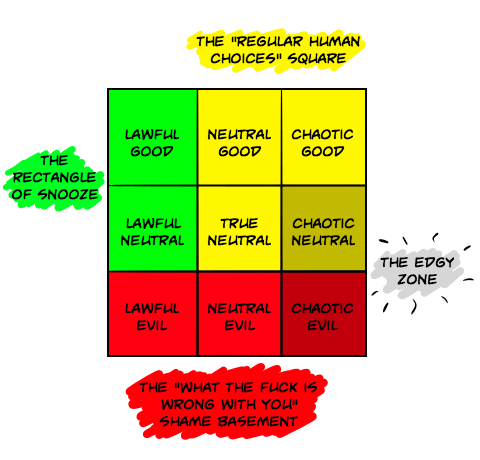
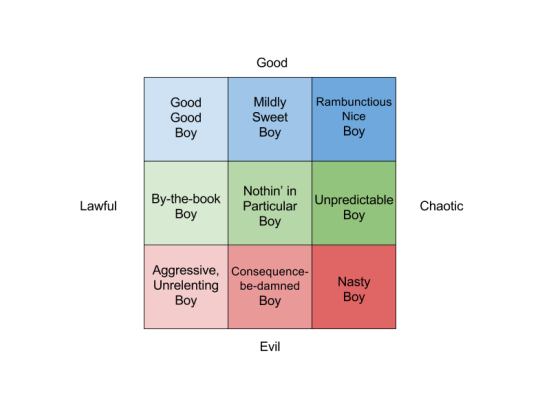
can someone explain the alignment chart for me but in like, the simplest wording possible lmao
lawful good: i want to do the right thing, and following society’s rules is the best way to do that
neutral good: i want to do what’s right, and i’m willing to bend or break the rules as long as no one gets hurt
chaotic good: i’m willing to do whatever it takes as long as it’s to do the right thing
lawful neutral: following the rules of society is the most important thing, and that matters more to me than doing what’s right
true neutral: i just want myself and the people i care about to be happy
chaotic neutral: i want my freedom, and i don’t care what i have to do to keep it
lawful evil: to impede the protagonists (in whatever evil way) is my primary goal, but i follow my own code of morals even when it’s inconvenient
neutral evil: to impede the protagonists (in whatever evil way) is the my primary goal, and while i’ll do what it takes to achieve it, i also won’t go out of my way to do unnecessary damage
chaotic evil: i relish in destruction and want to do as much damage as possible while i try to achieve my primary goal


 teakepp