Celebrate Gender Diversity With – Trans Pride Soap!
This hand-made soap is crafted after the image of Guanyin, an East-Asian goddess who transitioned from mortal assigned male, to divine woman, after reaching transcendence.
Each soap is made with shea butter and coconut oil. Available in four different scents, based after gender identities;
Trans Woman scent ’Longnü’ ((Strawberry, Lemon, Lilac, Freesia, Patchouli)
Trans Man scent ’Iphis’ (Rosemary, Buttermilk, Frankincense)
YO I’m also spreading this because she’s actually really important she’s Kannon (観音) in Japan and she has a crap ton of incarnations. One incarnation is this princess named Miaoshan who was pressured by her father to marry, but she wouldn’t budge unless she could marry one who helped the aging, sick, and the dying. Her dad was confused until she said that meant she wanted to marry a doctor, so he threw a fit and had her do hard labor. She ditched that to go help with religion and people who needed her.
Another incarnation is Avalokiteśvara, who was REALLY important and the quote says “it is easier to count all the leaves of every tree of every forest and all the grains of sand in the universe than to count the blessings and power of Avalokiteshwara”. So HOLY CRAP.
SO YEAH ID BEEN TO JAPAN, I WANDERED KANNON’S TEMPLE, AND I HAD NO IDEA.
**ON STONES : SOME PIECES OF ADVICE & LORE FROM FRENCH TRADITIONAL WITCHCRAFT**
French soil is rich and diverse because of the variety of landscapes the country provides. Sea, sand, extinct volcanos and green mountains flourish along forests, arid countys and rocky plains. Snow, ice, sun and rain molded the geological aspects of the territory and shaped the land we know today. Gemstones and semi-precious crystals are abundant, but before even starting to consider dwelling in those, there also exist a few rocks, pebbles and stones that various countryside witchcraft practices recognized and used long ago. Here follow a few of them.
MYTHICAL ORIGINS
It is said that underground currents and flows merge to form a great serpent. This serpent sometimes arises, unearthed, where lie sacred wells and springs, thus giving them great healing virtues. The serpent dug caves for fairies to dwell in (we French people believe fairies to reside in grottos : many regions have their own « Grotte des Fées »); then for Men to live and inhabit. Its head is stud with bright shining gemstones, its body set with marvelous crystals with vibrant colors and powerful properties. The serpent is a mythical guardian, and the first, primitive and primal Genius Loci.
Stones store the virtues of the spirit inhabiting the land they dwell on.
GREAT STONES
Menhirs and dolmens still draw people today, weither for pilgrimage or individual quests. They were considered gatekeepers of the underworld. They are mostly known for the healing rituals and other transfer medicine they convey. Other uses include fecundity rites where women would come to rub their genitals on the most phallic parts (the Pierre Piquée, Aubière, Puy-de-Dôme).
Wobbly stones were used to baptize children : one would leave the newborn child at the basis, then shake the stone to gift them with strength, happiness and protection. Some say stones were able to move on their own accord, adding an extra blessing to the rite.
HOLED STONES
Known as hagstones in the Bristish Isles, French people name them « pierres trouées », « pierres à cupules », « pierres à empreintes ». These are stones naturally pierced with a hole by water (mostly rain and saltwater). They are powerful healing allies (fever, afflictions from the eyes, sterility, skin disease, etc). With stones large enough, placing the body part in need directly inside the hole – the head, a limb, a finger, was said to cure anything form intellectual deficiency to sprains and warts.
These stones are said to bear the marks of spiritual beings such as angels, demons, mythical heroes, giants (Gargantua) or saints.
DOMESTIC STONES
This witch comes from the Alpine regions, where one is able to dig up their own quartz in the mountains or drag the rivers to discover large pieces of quartz with diverse inclusions (sometimes even finding gold, if the Dame Blanche – White Lady – don’t catch you first). Once, in Marseille, I managed to unearth big chunks and nuggets of smoky quartz the size of my palm while hiking on an inlet. It is said quartz comes from the old glaciers around : these are pieces of ice so ancient it doesn’t melt anymore.
When I was a child, I also spent hours looking around for small, shiny white stones : they were said to be « pierres de lune » (proper moon stones) that cracked and felt directly on Earth for us to find if we were lucky enough. I was thrilled to own myself a very small part of the Moon and treasured my discoveries.
One of the most popular stone is the well-known « pierre à venin » (venom stone) – either granite, quartz or variolite, sometimes schist or limestone. These are small black stones with green stains. They come from various fossils, prehistoric tools or natural stones and are also called « pierres-serpent » (snake stones) or sometimes « pierres de salamandre » (salamander stone). One would need to polish them on sheep skins before using them. They were said to be body parts belonging to old big reptiles, snakes and other venomous beings long gone – for example, urchin fossils were known as « œuf de serpent » (snake egg). Some village practitioners also claim to find them in viper nests, or in places where snakes would fight – thus making the stone a stone made from the snake’s slime. The snake would dribble and roll the stone with its body when fighting, giving it its round, spherical shape.
One would keep their stones in jute bags or store them in terra cotta (clay) containers.
Uses : Great for snake bites, bug stings and skin diseases. Leave the pierre à venin in water for anywhere between half an hour to a full day, then drink half of it and pour the remaining water on the affected body part to cure the disease away. They were also hung on beasts (cattle, dogs, cats…) to protect them.
The « pierre de crapaud » (toad stone) is named after its shape and color making it look like a toad. Some say you could find it inside the toad’s head, some say it is the toad brain. Used just like the pierre à venin, but dry, by rubbing the stone on the needing area.
The « pierre des yeux » (eyes stone) is a stone found in swallows nests. It can cure any eye disease.
The « pierre du sang » (blood stone) is a red-colored pebble used to stop haemorrhagies and other blood problems by direct application.
The « pierre de la Croix » (Cross stone) is a flat gray pebble where you can see a white pattern evoking the Cross. These were especially popular in Bretagne and Auvergne, and were known as powerful talismans. They protect their bearer from the evil eye, nocturnal fears, spellcraft, and can also cure one from haemmorhages, diarrhea and rabies.
The « pierre des femmes » (women stones) are limonite nodules known to help women in labour, quickening the delivery, but interestingly enough they were also used, if combined with the right sacred plants, in abortiveritesandpreparations.
Other stones also include the « pierre de la tête » (head stone, used against migraines – often quartz pebbles); « pierre de la peste » (plague stone, a black pebble); « pierre des dents » (teeth stone) or « pierre des cauchemars » (nightmare stone, holed silex hung on the bedroom doors or put under the bed to prevent bad dreams).
***
(Appreciatively sourced from BERTON H., Sorcellerie en Auvergne, Éditions De Borée, 2003)
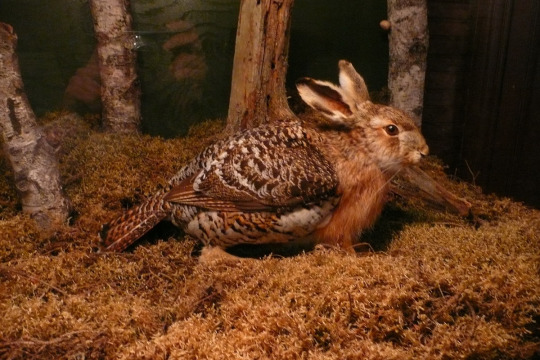
there aren’t enough posts going around about the swedish cryptid known as the skvader which is a rabbit with pheasant wings and also a very good boy.
like this one dude just made a fake taxidermy and spread it around as a hoax for a good ass while and it lead to this really cool fantasy creature and i am genuinely dissapointed that it never gets used in anything
THE BOY
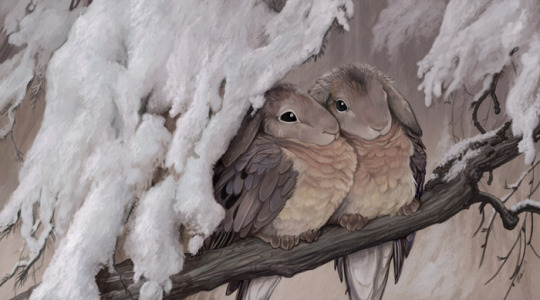
Rabbirds, by the amazing @tkingfisher/Ursula Vernon (source).
Like many pagans in Europe, the Slavic pagans and polytheists residing in Croatia shared a powerful connection with nature: they believed in many gods, guardians and spirits that served as patrons of the forests, meadows, suns, moons and the earth itself. They believed that each living entity, be it plant or animal, contained a soul. It was from this respect of the natural world that one of the oldest documented traditions, from the 10th century, was born: the Cult of the Trees.
In some regions, Slavic pagans believed that certain trees held a connection to the deities and spirits present in their local folk lore. Temples and statues were built using corresponding trees; however, some trees were strictly for worship and were not to be harvested. In some cases, temples were simply wooded areas filled with the trees associated with a particular deity.
Folk worshiped these trees: they prayed to them, made sacrifices to them, held important meetings under them and even confessed their sins to them. Some even performed rituals in which they would adorn the trees with flowers, red cloth and fruit. A few smaller villages in Croatia and parts of Dalmatia continue to have a Sacred Tree which serves as the patron of the village – their protector against storms, floods and droughts. It is believed that if an individual steals a piece of the Sacred Tree that their family would suffer devastating illness and even death.
Many folk still believe that the trees serve as symbols of the universe, fertility and wisdom – that the spirits share their wisdom with us if we choose to listen. Some folk in the Southern Slavic regions believe that the souls of the deceased could seek refuge and reside within the trees. In some regions, folk believed that the trees were symbolic of our own mortality and that the changing of the seasons were a metaphor for our own human experiences:
Rebirth/Birth: In Spring the trees would give birth to new buds and, eventually, new leaves, blossoms and branches.
Adolescence: In Summer the leaves and branches are reaching full size. Blossoms are slowly developing into fruit and nuts.
Adulthood: In Autumn the leaves have turned colour and the fruit and nuts have matured and are ready to be collected.
Death: In Winter the leaves are beginning to fall until the tree remains barren.
In the rural areas of Croatia, these beliefs are commonplace in villages with generations of elders. These communities have a few cult trees that serve specific purposes, with a firm logical structure regarding their positioning in relation to architectural pieces (homes, churches, markets). The reasons are rooted in old mythology and vary from community to community.
Below are a few trees that were significant in the Croatian tribe I was raised in. I do not speak for any other Slavic magic practitioners as their associations vary from region to region and are influenced by the land and their beliefs.
Baba Yaga, in Slavic folklore, is a supernatural being (or one of a trio of sisters of the same name) who appears as a ferocious-looking woman. Baba Yaga flies around in a mortar, wields a pestle, and dwells in the forest in a hut usually described as standing on chicken legs. Although she is mostly portrayed as a terrifying old crone, Baba Yaga may help those that encounter or seek her out. Her faithful servants are the White Horseman, the Red Horseman and the Black Horseman.
The bannik is an Eastern European bathhouse spirit that occasionally takes the form of a cat. Its mischief is abated only by offerings of fir branches.



 teakepp