So a lot of you might not know, but the bee is one of Aphrodite’s sacred animals! Bees are so, so important for pollinating plants, but they’re quickly dying out. A good act of devotion might be to plant flowers, especially ones that are known for attracting bees.
This is especially useful because spring will be coming around in a couple months (for the northern hemisphere that is). I’m almost 110% that Aphrodite would be VERY pleased to see her lovelies having plants for the bees to pollinate and float around! 🌹🐝❤️
Already starting to plan this years garden so I thought I should do a post on Witch Gardens
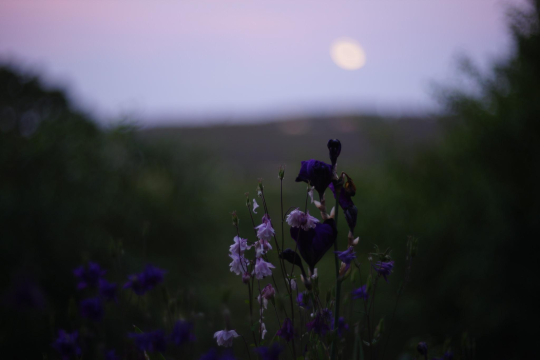
Moonlight Garden
A garden that blooms in the moonlight, a great place to perform night time rituals, meditations, or to just take a midnight stroll. A garden that is full of magick even after the sun sets.
Plants to add in your moonlight garden:
Moonflower: (Ipomoea alba) A nocturnal relative of the morning glory. Has fragrant flowers that open at dusk and close by dawn.
Evening Primrose: (Oenothera biennis) Has beautiful, scented flowers that bloom only at dusk.
Night Flox: (Zaluzianskya capensis) A sweetly fragranced flower that only unfurls its pinwheeled shaped flowers after dusk.
Four O’Clock: (Mirabilis jalapa) Its scented flowers bloom at around 4:00pm (hence its name) and do not close up until morning.
Queen of the Night: (Epiphyllum oxypetalum) A species of cactus whose flowers only open at night. Attracts moths and bats!!!
Night Blooming Jessamine: (Cestrum nocturnum) Strong, sweet scented star shaped flowers that only bloom at night. Attracts moths and bats!!! All parts are toxic, do not ingest!
Angel’s Trumpet: (Brugmansia) Produces a strong scent on warm summer evenings. All parts are toxic, do not ingest!
Evening Stock: (Matthiola longipetala) Produces lots of small blossoms that produce a perfume described as a mix of vanilla, rose, spice, and cloves only after the sun sets.
Ever-Flowering Gladiolus: (Gladiolus tristis) Release a strong almond fragrance after dusk.
Lilac: (Syringa vulgaris) Although has a perfume during the day, it is said to be a lot stronger after dark.
Flowering Tobacco: (Nicotiana) Open in the late afternoon and have a fragrance that smells of jasmine. All parts are toxic if ingested!
Summer Snapdragon: (Angelonia angustifolia) Preferably in white, to reflect the moonlight. Has a scent apple-scented foliage.
Silvermound: (Artemisia schmidtiana) Has thick foliage that will shimmer under the moonlight.
Jack Frost: (Brunnera macrophylla) Hdeart shaped leaves of silver and green, perfect to add more highlights of silver to your moon lit garden.
Any plant that blooms after dark or has white, lavender, pale pink, pale yellow on it is a perfect addition to your moonlight garden.
Things to add:
Stepping stones that have the phases of the moon.
Fairy lights
A place to sit
Candles
A small fountain to sing along with the insects and birds of the night
String charms and bells on tree branches for a soft jingling every time a gentle breeze passes.
Herb Garden
For witches who need a more practical garden for uses of healing, tea crafting, drying, and growing plants used in their practices.
Plants to add to your herb garden:
Anise: Helps to ward of the evil eye, find happiness, and stimulates psychic abilities.
Basil: Use for anything pertaining with love, exorcism, wealth, sympathy, and protection. Dispels confusion, fears & weakness. Drives off hostile spirits.
Bergamont: Corresponds with money and prosperity. Provides with protection from evil and illness, improves memory, stops interference, and promotes restful sleep.
Borage: Corresponds with courage and psychic powers.
Cat Nip: Is sacred to the Goddess Bast. Brings forth beauty, happiness, good luck, and good spirits.
Chamomile: Corresponds with love, healing, and sleep. Is known to reduce stress.
Chervil: Brings a sense of the higher self, placing you in touch with your divine, immortal spirit.
Coriander: Corresponds with love, health, immortality, and protection.
Dill: Corresponds with money, protection, luck and lust.
Lemon Balm: Corresponds with love, success, healing, and psychic/spiritual development.
Marjoram: Used to cleanse, purify, and to dispel negative energy.
Mint: Promotes energy, communication and vitality.
Oregano: Corresponds with joy, strength, vitality, and added energy
Parsley: Calms and protects the home.
Rosemary: Protects, cleanses, purifies, and aids memory.
Sage: Used for self purification and dealing with grief and loss.
Thyme: Attracts loyalty, affection, and the good opinion of others.
Things to add:
A place to dry herbs
A place to compost any herb scraps
Rocks
A place to leave offerings before you harvest
Bee Garden
Make yourself a sanctuary to watch bees frolic and thrive
Plants to add to your bee garden:
Bee balm
Lavender
Crocus
Snow Drop
Wildflowers/Any native species
Catmint
Borage
Anise hyssop
Heliotrope
Sunflower
Oregano
Yarrow
Coneflower
Black eyed susan
Asters
Goldenrod
Foxglove
Marigold
Pansies
Sweet peas
Nasturtiums
Things to add:
Bee houses
Bee waterers/bee baths
Bee feeders
A place for offerings to the bees
Some other ideas for your garden:
Hummingbird garden
Medicinal garden
A garden whose plants and decorations represent/correspond with your practice.
Butterfly Garden
Faerie Garden
The options are endless! I hope this gives you some ideas for this years garden.
So maybe you’re a college witch with limited space and money, limited to the one window in your dorm. Or, maybe you’re a witch without extensive backyard space who wants to start up a magical garden. Perhaps you’re a kitchen witch who wants the freshest herbs right at her fingertips.
For many witches, having a garden seems to be a bit of a no-brainer. After all, plants and magic go hand-in-hand. Plus, when thinking of a witch, it’s hard not to think of a cottage in the woods with a little vegetable garden out front. Unfortunately for the majority of us, our cottage in the woods is a tiny flat, and our garden out front is a windowsill with limited space.
This is when it comes time to embrace your craftiness and bring your garden indoors! Not only does it place your garden in a convenient location, it also allows you to freshen the air, recycle what would otherwise harm the earth, and embrace your witchy green thumb!
Samwise Gamgee’s Dream Come True!
Okay, so if you follow my blog, chances are that you’re wondering if this whole potato theme for today is because of St. Patrick’s. I promise, I’m not enforcing Irish stereotypes on purpose. I just really like potatoes, and when it comes to gardening, it’s a bit of a disservice to overlook this vegetable. After all, when we think about kitchen gardens or home gardens, we think of herbs or flowers, and not about the veggies we eat that live a rather subterranean existence. But potatoes – those lovely little brown lumps that we can get for a couple dollars per five pound bag in the supermarket – are not only inexpensive. They’re extremely hardy little plants that can be grown rather easily.
You don’t need much to get started with this project. First, you need “seed potatoes.” This is not hard to find. Simply take a few potatoes and allow them to grow a bit. They will sprout a few short little stalks from the eyes on the surface. Save these, and get potting mix and two medium to large plastic pots that can easily stack one inside the other.
Carefully cut a few panes out of the inner pot as in the picture above, then place the inner pot into the outer one. Fill the pot part way with soil, add your seed potatoes, and cover them with potting mix. Water as needed until the potato plants peek up out of the soil. Cover them again and repeat this process gradually until the pot is full.
In roughly three months, you’ll have potato plants that are ready to begin harvesting. Simply lift the inner pot up and pluck your potatoes as needed from the sides! Fresh potatoes, free!
Ideally, this method of potato cultivation can help feed a family of four for about a year. My family had used this method, and our family of five was able to stay fed for a year off of two of these planters (we like potatoes… and we eat them a lot…)
How Can I Witch This?
Potatoes are very useful in witchcraft, and you can find out some of their magickal uses in my Foodie Friday article about Seafood Gnocchi. As for growing them, many of those properties remain the same!
As with any gardening venture, add crystals to the soil to promote healthy and fruitful plants, draw sigils and symbols on the pottery or planters, and incorporate protection or fertility ingredients into the soil – such as eggshell or coffee grounds.
Outside of the useful culinary benefits of having a potato planter on your front porch, a garden such as this is useful for outdoor space cleansing in small spaces, and for inviting prosperity into your home or property since potatoes represent such comforts as full bellies and pockets.
Since a small number of potatoes can be used to produce a much larger quantity in this planting method, you could even turn them into a prosperity or slow growth money spell! Pour your intent into the seed potatoes when you plant them, and as they produce new crops, give them water and food as an offering in order to keep the spell fed! Some of the potatoes produced in this way can also be converted into offerings or used in spellwork, in addition to being used to cook with!
The possibilities are practically endless where potatoes are concerned! See what you can do with these nifty little spuds!
A+ content important I would also suggest soft goth things such as
blackbird euphorbia (maybe tender here maybe niagara goths can have u)
black negligee bugbane
chocoholic bugbane (tbh all bugbane is prolific and spoopy and wonderful)
hellebore black swan maybe also tender?
black truffle cardinal flower
the ever fave heuchera obsidian
britt marie crawford ligularia FAVE JURASSIC LOOKING BB
and obv purple smokebush for soft goth smoke monster vibes
thank the dark goddess for you! Saving this post!
Black pearl pepper is another good one, I can attest that they look really cool in person. Aside from being ornamental, the little peppers are edible, and I think decently hot? I haven’t tasted them though so idk about that part
Black Pearl plants are EXTREMELY drought hardy and the peppers taste great, yes! I love mine even though I’ve given it less than stellar care; I’ve had it for…almost 10 years I think!
These pictures are so cute and so is the article.
Black Mondo grass also.
Also this is a tropical moat places but bat flower/ Tacca chantieri
I could not find a specific page for this, but Ylang Ylang is usually associated with calming, employment, love, magickal ability, and anti-negativity. (source)
Research your climate zone [usa] [ca]. Buy plants that are recommended for your climate zone.
Note the sunniness of where you are going to grow your plants.
no direct sun at all (still needs ambient light) = full shade
sun in morning/evening shade for rest of the day = part shade
sun all day = full sun
shade in morning/sun for rest of the day = sunny, part sun
follow these guidelines:
south window = sunny, part sun, sometimes full sun
east window = part shade
west window = part shade
north window = full shade
sun bulbs can be purchased to encourage indoor growth.
indoor plants used to low light might easily burn and dehydrate if left in full sun for too long, even if they are normally hardy plants.
soil & drainage
basic potting soil or gardening soil is “universal” for almost all plants.
major exception:
cactus & succulents = rocky, sandy, succulent soil is necessary for proper drainage
all plants need proper drainage or else they will ‘drown’. Choose only containers with holes in the bottom. Use a thin layer of rocks and/or gravel at the bottom of containers to ensure the hole is not clogged with soil.
watering
water less = cooler, cloudy, low wind, humid, rainy.
water more = warmer, sunny, windy, dry, no rain.
note the type of container you have used.
dries out more slowly, water less = metal, plastic, glazed ceramic, light colors in sunlight, nonporous.
dries out more quickly, water more = terracotta, wood, moss, dark colors in sunlight, porous.
indoor gardeners, plants with smaller root systems need less water. Watering them more will drown them; not encourage them to grow. The roots cannot drain the soil and the water will sit, drowning the tender root system 😦 this applies primarily to container gardening.
no need to water daily. water when the plant tells you it is ready:
its leaves droop (aim to water a day before this hits!)
it begins to stop being glossy and starts looking a bit drab
the soil is dry 1 to 2 inches down
the pot is lighter because the soil is dry (lift pots before and after watering to compare)
you want your plant’s root ball to be moist.
when roots dry, they shrink, pulling away from the edges of the pot.
when you add water to the pot, it follows the path of least resistance around the edges of the pot, straight past the root system.
to fix this, soak the plant once in water. then, water again.
if a plant is not seeming to be hydrated no matter how much you water, it is possible all your water is draining off to the sides and never reaching the actual root ball. to fix:
soak thoroughly in water several times.
place your container in a tray of water and let osmosis or whatever suck that water right up straight to the root.
avoid frequent, small waterings. this encourages the plant’s roots to grow too close to the surface. It is best to thoroughly water plants then let them dry out slightly before you water again (no need to let the leaves droop or anything – just wait until the plant is ready again, as described above).
getting a plant from a nursery
choose smaller plants as long as they are healthy.
smaller plant = smaller root system, healthy.
larger plant = big root system, curled and unhealthy in small commercial pot.
young plants with fruit or flowers = prematurely grown, highly stressed, unhealthy.
healthy plants have several identifiable traits.
they are colorful and lush
they are firm and do not have mushy stems or leaves
they have thick white roots
they are free of brown, white, or yellow spots
they are free of bug bites and infestation
transplanting a new plant to a pot
get the right sized pot.
too big = easily drown plant in soil that cannot drain.
too small = root system curls in an unhealthy way, not properly sized.
the “right sized” pot is based on the current size and future growth of the plant.
if a plant is 10-12 inchestall, give it an 8 inch diameter pot.
if the plant is 2-3 feet tall, give it a 24 inch diameter pot.
with a new nursery plant, get a container giving about 2 extra inches on each side of the plant.
get a container tall enough that you can have 2 inches of soil at the bottom of the container, a plant, and one inch of space between the topsoil and the lip of the container. This gives you plenty of room to water!
ensure your drainage hole is properly covered with mesh or a stone to prevent soil from falling out or clogging it.
moisten your potting soil if it is really dry. Mix some in a pail or bucket with water until it has the texture of a squeezed sponge.
ensure the nursery plant is damp enough to transplant. If the soil is too dry the root system will not hold the dirt together and everything will just fall apart (!!!). Soak your nursery plant for 30 minutes in water.
fill the space around the plant with potting soil, leaving one inch of free container space above the plant.
although the soil and plant should both be damp, you must now water your transplanted baby to ensure all air pockets are eliminated and that the soil has settled around the root ball.
even if plant is “full sun” do not simply place a young plant right outside for hours and hours. “Harden off” plants by slowly introducing them to the sun for an hour at a time and progressing over a course of days until they are ready for full sun.
enjoy plants :3
extensively plagiarized from Container Gardening for Dummies
I have a friend asking me to do this, so with my care of my succulents of two months I shall share for her sake.
💖Most Succulents should be watered every two weeks to a month. I tend to do mine every two weeks only because I have sand mixed in with actual soil so it dries out fairly quickly.
🌸Note that each succulent is different. Researching the type of succulent it is and how much water, sun and room it needs is important. This goes for every plant you receive or buy.
✨when getting any plant from a store, always repot the plant into a bigger pot at least 2x the size of the original pot. Most succulents just need the root room. So make sure it’s deep enough for it.
💖with how succulents grow they can over crowd the top of their pot. When that happens you may want to put it in a new pot.
🌸when watering soak the soil. It may be best to have a pot the stains incase you accidentally over water the plant.
✨Many Succulents can handle the cold. It does drop temps tires in desert like places after all.
💖be careful when transplanting. Moving any plant into a new pot can put it into shock. Sometimes they will recover other times they won’t.
If you are a baby witch who wants to garden but doesn’t exactly know how to start, this is the post for you. Keep in mind that with flowering plants, there will tend to be bees. Bees are your friends unless you allergic to them because they help pollinate and support the ecosystem that humans need to survive.
A quick google search will show you how to plant and care for each of these plants. To the side are the magic purposes that Mama Cat uses them for, if you would like to use them for different kinds of magic, that is totally fine and up to you.
If you are interested in flowers, here are some plants that are easy to grow and tend to take care of themselves. They are also great for attracting bees.
Sunflowers- good for money and confidence magic
Sweet Peas- good for love, friendship, and calming magic
Nigellas- good for protection magic
Aquilegia- good for glamours and abundance magic
Californian Poppy- good for sleep magic
Nasturtium- good for star/divination magic
Pansy- good for illusion magic
Marigolds- good for protection and glamour magic
If your more into herbs, try these out.
Chives- good for protection magic
Basil- good for money and love magic
Fennel- good for love and luck magic
Garlic- good for any kind of magic
Lavender- good for calming magic
Rosemary- good for protection and love magic
Sage- Good for protection and banishing magic
If you enjoy more leafy and hardy plants, give these a whirl
Succulents (Aloe Vera, Hen and Chicks, Cobweb)- Good for strength magic
Ferns- good for happiness and protection magic
English/Star Ivy- good for protection magic
Philodendron- good for protection and strength magic
Dragons Tongue- good for glamour night magic
If you would like to try growing some vegetables, try these.


 teakepp