Already starting to plan this years garden so I thought I should do a post on Witch Gardens
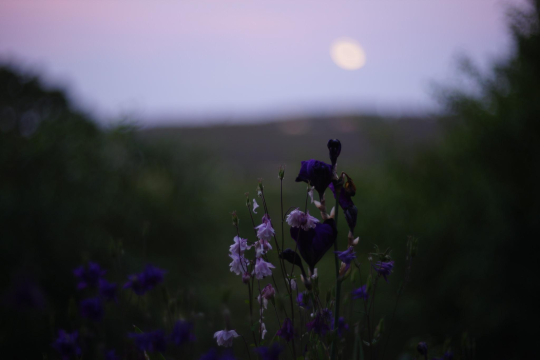
Moonlight Garden
A garden that blooms in the moonlight, a great place to perform night time rituals, meditations, or to just take a midnight stroll. A garden that is full of magick even after the sun sets.
Plants to add in your moonlight garden:
Moonflower: (Ipomoea alba) A nocturnal relative of the morning glory. Has fragrant flowers that open at dusk and close by dawn.
Evening Primrose: (Oenothera biennis) Has beautiful, scented flowers that bloom only at dusk.
Night Flox: (Zaluzianskya capensis) A sweetly fragranced flower that only unfurls its pinwheeled shaped flowers after dusk.
Four O’Clock: (Mirabilis jalapa) Its scented flowers bloom at around 4:00pm (hence its name) and do not close up until morning.
Queen of the Night: (Epiphyllum oxypetalum) A species of cactus whose flowers only open at night. Attracts moths and bats!!!
Night Blooming Jessamine: (Cestrum nocturnum) Strong, sweet scented star shaped flowers that only bloom at night. Attracts moths and bats!!! All parts are toxic, do not ingest!
Angel’s Trumpet: (Brugmansia) Produces a strong scent on warm summer evenings. All parts are toxic, do not ingest!
Evening Stock: (Matthiola longipetala) Produces lots of small blossoms that produce a perfume described as a mix of vanilla, rose, spice, and cloves only after the sun sets.
Ever-Flowering Gladiolus: (Gladiolus tristis) Release a strong almond fragrance after dusk.
Lilac: (Syringa vulgaris) Although has a perfume during the day, it is said to be a lot stronger after dark.
Flowering Tobacco: (Nicotiana) Open in the late afternoon and have a fragrance that smells of jasmine. All parts are toxic if ingested!
Summer Snapdragon: (Angelonia angustifolia) Preferably in white, to reflect the moonlight. Has a scent apple-scented foliage.
Silvermound: (Artemisia schmidtiana) Has thick foliage that will shimmer under the moonlight.
Jack Frost: (Brunnera macrophylla) Hdeart shaped leaves of silver and green, perfect to add more highlights of silver to your moon lit garden.
Any plant that blooms after dark or has white, lavender, pale pink, pale yellow on it is a perfect addition to your moonlight garden.
Things to add:
Stepping stones that have the phases of the moon.
Fairy lights
A place to sit
Candles
A small fountain to sing along with the insects and birds of the night
String charms and bells on tree branches for a soft jingling every time a gentle breeze passes.
Herb Garden
For witches who need a more practical garden for uses of healing, tea crafting, drying, and growing plants used in their practices.
Plants to add to your herb garden:
Anise: Helps to ward of the evil eye, find happiness, and stimulates psychic abilities.
Basil: Use for anything pertaining with love, exorcism, wealth, sympathy, and protection. Dispels confusion, fears & weakness. Drives off hostile spirits.
Bergamont: Corresponds with money and prosperity. Provides with protection from evil and illness, improves memory, stops interference, and promotes restful sleep.
Borage: Corresponds with courage and psychic powers.
Cat Nip: Is sacred to the Goddess Bast. Brings forth beauty, happiness, good luck, and good spirits.
Chamomile: Corresponds with love, healing, and sleep. Is known to reduce stress.
Chervil: Brings a sense of the higher self, placing you in touch with your divine, immortal spirit.
Coriander: Corresponds with love, health, immortality, and protection.
Dill: Corresponds with money, protection, luck and lust.
Lemon Balm: Corresponds with love, success, healing, and psychic/spiritual development.
Marjoram: Used to cleanse, purify, and to dispel negative energy.
Mint: Promotes energy, communication and vitality.
Oregano: Corresponds with joy, strength, vitality, and added energy
Parsley: Calms and protects the home.
Rosemary: Protects, cleanses, purifies, and aids memory.
Sage: Used for self purification and dealing with grief and loss.
Thyme: Attracts loyalty, affection, and the good opinion of others.
Things to add:
A place to dry herbs
A place to compost any herb scraps
Rocks
A place to leave offerings before you harvest
Bee Garden
Make yourself a sanctuary to watch bees frolic and thrive
Plants to add to your bee garden:
Bee balm
Lavender
Crocus
Snow Drop
Wildflowers/Any native species
Catmint
Borage
Anise hyssop
Heliotrope
Sunflower
Oregano
Yarrow
Coneflower
Black eyed susan
Asters
Goldenrod
Foxglove
Marigold
Pansies
Sweet peas
Nasturtiums
Things to add:
Bee houses
Bee waterers/bee baths
Bee feeders
A place for offerings to the bees
Some other ideas for your garden:
Hummingbird garden
Medicinal garden
A garden whose plants and decorations represent/correspond with your practice.
Butterfly Garden
Faerie Garden
The options are endless! I hope this gives you some ideas for this years garden.
A+ content important I would also suggest soft goth things such as
blackbird euphorbia (maybe tender here maybe niagara goths can have u)
black negligee bugbane
chocoholic bugbane (tbh all bugbane is prolific and spoopy and wonderful)
hellebore black swan maybe also tender?
black truffle cardinal flower
the ever fave heuchera obsidian
britt marie crawford ligularia FAVE JURASSIC LOOKING BB
and obv purple smokebush for soft goth smoke monster vibes
thank the dark goddess for you! Saving this post!
Black pearl pepper is another good one, I can attest that they look really cool in person. Aside from being ornamental, the little peppers are edible, and I think decently hot? I haven’t tasted them though so idk about that part
Black Pearl plants are EXTREMELY drought hardy and the peppers taste great, yes! I love mine even though I’ve given it less than stellar care; I’ve had it for…almost 10 years I think!
These pictures are so cute and so is the article.
Black Mondo grass also.
Also this is a tropical moat places but bat flower/ Tacca chantieri
I could not find a specific page for this, but Ylang Ylang is usually associated with calming, employment, love, magickal ability, and anti-negativity. (source)
So maybe you’re a college witch with limited space and money, limited to the one window in your dorm. Or, maybe you’re a witch without extensive backyard space who wants to start up a magical garden. Perhaps you’re a kitchen witch who wants the freshest herbs right at her fingertips.
For many witches, having a garden seems to be a bit of a no-brainer. After all, plants and magic go hand-in-hand. Plus, when thinking of a witch, it’s hard not to think of a cottage in the woods with a little vegetable garden out front. Unfortunately for the majority of us, our cottage in the woods is a tiny flat, and our garden out front is a windowsill with limited space.
This is when it comes time to embrace your craftiness and bring your garden indoors! Not only does it place your garden in a convenient location, it also allows you to freshen the air, recycle what would otherwise harm the earth, and embrace your witchy green thumb!
A Practice As Old As Time
In previous Domestic Garden Witch articles, I’ve covered setting up altars and arranging gardens so as to be living altars. As witches, we are often looking for ways in which we can reconnect with nature and find harmony with its ebb and flow. For as long as mankind has been around trees, it seems as though these impressive and beautiful plants have inspired and drawn us closer to the divine.
Nearly every culture has something to say when it comes to trees – their growth patterns, their spiritual significance, and even the varying properties of their constituent parts. Roots, leaves, branches, seeds or fruit, and wood… all have a part to play in many religions. This is particularly true for modern druidic practice, which draws from Celtic lore and centers around the magic in certain woods. And as can be seen from my current Runic Friday series on the Ogham, certain woods were prominent enough in Celtic lore to inspire a form of divination symbolized by Irish Celtic writing.
There are many ways in which we can bring the magic of trees into our lives, but when it comes to garden magic, I have yet to see a method so endearing as building shrines on or near them.
Simple or Complex, Religious or Spiritual
Shrines are most often associated with religion – especially religions such as Hindu, Shinto, and Buddhism. In short, a shrine is a type of altar which is usually dedicated to a specific god, spirit, or ancestor as opposed to being devoted to whole pantheons. Depending on the practice, these shrines can be ornate or very simple.
But shrines aren’t limited to religion or ancestor worship. Like altars, they can be places of meditation or magical working, and therefore can have a place in spirituality regardless of the faith practiced.
Tree shrines are a great way of integrating your practice with your garden, providing a place to meditate or work magic, or to honor deities. As an added benefit, they can be used to honor the spirit within the tree if desired. For those on a budget, the shrine need not be overly fancy – a small altar made of stone or wood at the base of the tree is sufficient. But if fancier shrines are more your style, inspiration can be drawn from real world shrines, which are often built into the hollows of trees or carved into them. Here, offerings can be made or deities worshipped as you see fit.
Consider the role the tree plays in your garden, and build your shrine with that in mind. Is your oak tree a silent protector? Or perhaps you feel that your maple tree brings luck and money to your home? If this is a tree in your orchard, the shrine may be a way by which you can ask for healthy and bountiful harvests!
A few examples:
-Oak: Oak trees are common, and are often symbolic of protection, knowledge, wisdom, and strength. Building a shrine decorated with acorns and fallen oak branches may be a way of encouraging the oak to protect your home, or inspire the drive to learn in your heart. Or even, perhaps, it can be a way of honoring the Oak King if you follow the Wiccan Wheel of the Year!
-Maple: Often associated with the moon, maple trees are linked to both magic and healing. Shrines dedicated to bringing about good health and happiness are ideal with maple trees, allowing them to extend their healing energies to you!
-Pine: Pine trees, a mainstay in the northern hemisphere, are trees of strength and raw power. They are ancient and invoke a sense of mystery. Shrines built at the base of a pine tree can be dedicated to finding that primal strength that lives within all of us, and for helping us connect with the past. These are excellent trees for ancestor shrines, depending upon your practice.
-Apple: Speaking of ancestor worship, apple is associated with otherworld. Its link to the dead is on a mythical scope, lending its energies quite well to ancestor shrines. However, it is also a tree of fertility and choice. As such, shrines meant to encourage fertility in the garden or one’s own fertility are great when built at the base of an apple tree. Furthermore, it helps encourage decisive action, inspiring quick decision making and wise undertakings.
In Conclusion…
While this week’s article is quite different from most, it calls us back to a time when the gardens we tended were the ones planted by nature itself. Whether your shrine is dedicated to the tree or some other spirit, or if it is built to honor an altogether different plant, it is a useful tool for the garden witch who thrives when working magic outdoors.
Consider how your garden can benefit from the added spiritual energy of shrines. Perhaps the trees have more to offer than we may realize!
Research your climate zone [usa] [ca]. Buy plants that are recommended for your climate zone.
Note the sunniness of where you are going to grow your plants.
no direct sun at all (still needs ambient light) = full shade
sun in morning/evening shade for rest of the day = part shade
sun all day = full sun
shade in morning/sun for rest of the day = sunny, part sun
follow these guidelines:
south window = sunny, part sun, sometimes full sun
east window = part shade
west window = part shade
north window = full shade
sun bulbs can be purchased to encourage indoor growth.
indoor plants used to low light might easily burn and dehydrate if left in full sun for too long, even if they are normally hardy plants.
soil & drainage
basic potting soil or gardening soil is “universal” for almost all plants.
major exception:
cactus & succulents = rocky, sandy, succulent soil is necessary for proper drainage
all plants need proper drainage or else they will ‘drown’. Choose only containers with holes in the bottom. Use a thin layer of rocks and/or gravel at the bottom of containers to ensure the hole is not clogged with soil.
watering
water less = cooler, cloudy, low wind, humid, rainy.
water more = warmer, sunny, windy, dry, no rain.
note the type of container you have used.
dries out more slowly, water less = metal, plastic, glazed ceramic, light colors in sunlight, nonporous.
dries out more quickly, water more = terracotta, wood, moss, dark colors in sunlight, porous.
indoor gardeners, plants with smaller root systems need less water. Watering them more will drown them; not encourage them to grow. The roots cannot drain the soil and the water will sit, drowning the tender root system 😦 this applies primarily to container gardening.
no need to water daily. water when the plant tells you it is ready:
its leaves droop (aim to water a day before this hits!)
it begins to stop being glossy and starts looking a bit drab
the soil is dry 1 to 2 inches down
the pot is lighter because the soil is dry (lift pots before and after watering to compare)
you want your plant’s root ball to be moist.
when roots dry, they shrink, pulling away from the edges of the pot.
when you add water to the pot, it follows the path of least resistance around the edges of the pot, straight past the root system.
to fix this, soak the plant once in water. then, water again.
if a plant is not seeming to be hydrated no matter how much you water, it is possible all your water is draining off to the sides and never reaching the actual root ball. to fix:
soak thoroughly in water several times.
place your container in a tray of water and let osmosis or whatever suck that water right up straight to the root.
avoid frequent, small waterings. this encourages the plant’s roots to grow too close to the surface. It is best to thoroughly water plants then let them dry out slightly before you water again (no need to let the leaves droop or anything – just wait until the plant is ready again, as described above).
getting a plant from a nursery
choose smaller plants as long as they are healthy.
smaller plant = smaller root system, healthy.
larger plant = big root system, curled and unhealthy in small commercial pot.
young plants with fruit or flowers = prematurely grown, highly stressed, unhealthy.
healthy plants have several identifiable traits.
they are colorful and lush
they are firm and do not have mushy stems or leaves
they have thick white roots
they are free of brown, white, or yellow spots
they are free of bug bites and infestation
transplanting a new plant to a pot
get the right sized pot.
too big = easily drown plant in soil that cannot drain.
too small = root system curls in an unhealthy way, not properly sized.
the “right sized” pot is based on the current size and future growth of the plant.
if a plant is 10-12 inchestall, give it an 8 inch diameter pot.
if the plant is 2-3 feet tall, give it a 24 inch diameter pot.
with a new nursery plant, get a container giving about 2 extra inches on each side of the plant.
get a container tall enough that you can have 2 inches of soil at the bottom of the container, a plant, and one inch of space between the topsoil and the lip of the container. This gives you plenty of room to water!
ensure your drainage hole is properly covered with mesh or a stone to prevent soil from falling out or clogging it.
moisten your potting soil if it is really dry. Mix some in a pail or bucket with water until it has the texture of a squeezed sponge.
ensure the nursery plant is damp enough to transplant. If the soil is too dry the root system will not hold the dirt together and everything will just fall apart (!!!). Soak your nursery plant for 30 minutes in water.
fill the space around the plant with potting soil, leaving one inch of free container space above the plant.
although the soil and plant should both be damp, you must now water your transplanted baby to ensure all air pockets are eliminated and that the soil has settled around the root ball.
even if plant is “full sun” do not simply place a young plant right outside for hours and hours. “Harden off” plants by slowly introducing them to the sun for an hour at a time and progressing over a course of days until they are ready for full sun.
enjoy plants :3
extensively plagiarized from Container Gardening for Dummies


 teakepp