• Cacti are some of the only plants to photosynthesize from their stems. Their needles are really just modified leaves.
• Avocados are only around because people pollinate and disperse them by hand. The large seed is indigestible to small mammals now. It was originally eaten by giant sloths who would poop them out far away from the parent tree so they can grow. This is called an evolutionary anachronism.
• Banana candy does not taste like bananas because it was designed to taste like the Gros Michel banana which was eaten in the pre-1950s. It was wiped out by a fungus called panama disease. Since bananas are asexual all of them are genetically identical making it easy to wipe them all out at once. However fungus is sexual so it evolves more quickly. This means eventually we may lose the modern banana, the Cavendish, to it as well.
• There are actually three different types of photosynthesis: C3, C4, and CAM. Which type is used depends on the aridness of the environment, and are increasingly more efficient as listed.
• Moss is amazing. The fuzzy part of the moss is called the gametophyte stage and it is haploid meaning it has one set of chromosomes like a sperm or an egg cell in humans. If you look closely, sometimes you will what look like little tiny seeds on stems coming out of the main body. This is the sporophyte stage and it’s diploid, or has two sets of chromosomes, like our body cells. Moss is the oldest type of plant.
• You can usually tell what animal pollinates a plant by the color and shape of its flowers. Red flowers are hardly ever pollinated by bees because bees cannot see red well. Butterfly flowers have long deep centers. Bird pollinated plants can bear weight and are wide and open. Bat pollinated plants usually smell strongly and are darkly colored.
• Almost all American native elms and chestnut trees are extinct because of fungi. Asian chestnut and elm have replaced them, because they are resistant to the strains.
• There is a type of fern that has over 1200 chromosomes. For reference, humans have 46.
• If you shine consistent low level red light on a plant it will grow extremely tall, because red light tells the plant it is being shaded by and competing with other plants. If you shine consistent green light on a plant it will not sprout or die (if already sprouted) because plants absorb red and blue light to use. This is also why plants are green, because the unused green light is reflected back out.
TLDR; Plants are frickin cool and should get as much love as our animal friends.
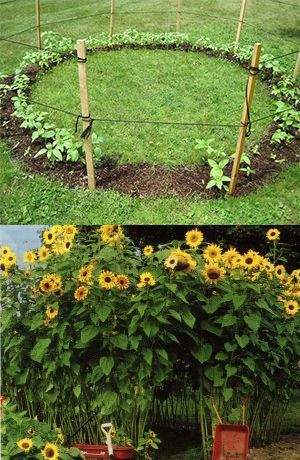
If
you want to get super fancy, do a second ring on the outside of 4’ tall
sunflowers then a third outer ring of the 1’ tall teddy bear
sunflowers. If there are any gaps you can interplant with cosmos,
amaranth and nasturtiums or (if there are huge gaps) gourds.
My mom used to do this for me in the backyard as a kid- it really works and I always loved it! Spent so many summer days having tea parties with teddy bears in my sunflower house.
So a lot of you might not know, but the bee is one of Aphrodite’s sacred animals! Bees are so, so important for pollinating plants, but they’re quickly dying out. A good act of devotion might be to plant flowers, especially ones that are known for attracting bees.
This is especially useful because spring will be coming around in a couple months (for the northern hemisphere that is). I’m almost 110% that Aphrodite would be VERY pleased to see her lovelies having plants for the bees to pollinate and float around! 🌹🐝❤️
Hi everyone! We are so happy to see how many questions you send us but for now we will be answering only questions made in our Patreon. Even if it´s $1 contribution, if you are our Patron, we will answer any question about witchcraft, the characters, or even advice ! Please help us keep creating °˖✧
♡
These plants are our personal fave. They all have many uses in witchcraft but we wrote down a few. Remember to take care of the living plants and use also dry herbs for a different approach 😉
Already starting to plan this years garden so I thought I should do a post on Witch Gardens
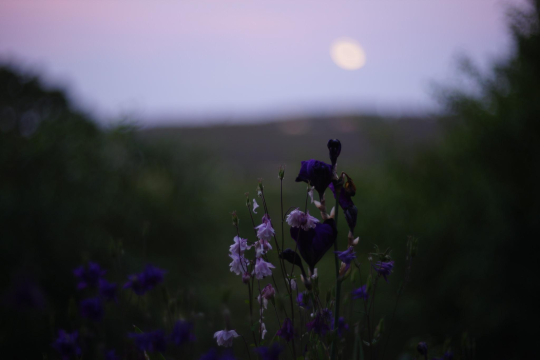
Moonlight Garden
A garden that blooms in the moonlight, a great place to perform night time rituals, meditations, or to just take a midnight stroll. A garden that is full of magick even after the sun sets.
Plants to add in your moonlight garden:
Moonflower: (Ipomoea alba) A nocturnal relative of the morning glory. Has fragrant flowers that open at dusk and close by dawn.
Evening Primrose: (Oenothera biennis) Has beautiful, scented flowers that bloom only at dusk.
Night Flox: (Zaluzianskya capensis) A sweetly fragranced flower that only unfurls its pinwheeled shaped flowers after dusk.
Four O’Clock: (Mirabilis jalapa) Its scented flowers bloom at around 4:00pm (hence its name) and do not close up until morning.
Queen of the Night: (Epiphyllum oxypetalum) A species of cactus whose flowers only open at night. Attracts moths and bats!!!
Night Blooming Jessamine: (Cestrum nocturnum) Strong, sweet scented star shaped flowers that only bloom at night. Attracts moths and bats!!! All parts are toxic, do not ingest!
Angel’s Trumpet: (Brugmansia) Produces a strong scent on warm summer evenings. All parts are toxic, do not ingest!
Evening Stock: (Matthiola longipetala) Produces lots of small blossoms that produce a perfume described as a mix of vanilla, rose, spice, and cloves only after the sun sets.
Ever-Flowering Gladiolus: (Gladiolus tristis) Release a strong almond fragrance after dusk.
Lilac: (Syringa vulgaris) Although has a perfume during the day, it is said to be a lot stronger after dark.
Flowering Tobacco: (Nicotiana) Open in the late afternoon and have a fragrance that smells of jasmine. All parts are toxic if ingested!
Summer Snapdragon: (Angelonia angustifolia) Preferably in white, to reflect the moonlight. Has a scent apple-scented foliage.
Silvermound: (Artemisia schmidtiana) Has thick foliage that will shimmer under the moonlight.
Jack Frost: (Brunnera macrophylla) Hdeart shaped leaves of silver and green, perfect to add more highlights of silver to your moon lit garden.
Any plant that blooms after dark or has white, lavender, pale pink, pale yellow on it is a perfect addition to your moonlight garden.
Things to add:
Stepping stones that have the phases of the moon.
Fairy lights
A place to sit
Candles
A small fountain to sing along with the insects and birds of the night
String charms and bells on tree branches for a soft jingling every time a gentle breeze passes.
Herb Garden
For witches who need a more practical garden for uses of healing, tea crafting, drying, and growing plants used in their practices.
Plants to add to your herb garden:
Anise: Helps to ward of the evil eye, find happiness, and stimulates psychic abilities.
Basil: Use for anything pertaining with love, exorcism, wealth, sympathy, and protection. Dispels confusion, fears & weakness. Drives off hostile spirits.
Bergamont: Corresponds with money and prosperity. Provides with protection from evil and illness, improves memory, stops interference, and promotes restful sleep.
Borage: Corresponds with courage and psychic powers.
Cat Nip: Is sacred to the Goddess Bast. Brings forth beauty, happiness, good luck, and good spirits.
Chamomile: Corresponds with love, healing, and sleep. Is known to reduce stress.
Chervil: Brings a sense of the higher self, placing you in touch with your divine, immortal spirit.
Coriander: Corresponds with love, health, immortality, and protection.
Dill: Corresponds with money, protection, luck and lust.
Lemon Balm: Corresponds with love, success, healing, and psychic/spiritual development.
Marjoram: Used to cleanse, purify, and to dispel negative energy.
Mint: Promotes energy, communication and vitality.
Oregano: Corresponds with joy, strength, vitality, and added energy
Parsley: Calms and protects the home.
Rosemary: Protects, cleanses, purifies, and aids memory.
Sage: Used for self purification and dealing with grief and loss.
Thyme: Attracts loyalty, affection, and the good opinion of others.
Things to add:
A place to dry herbs
A place to compost any herb scraps
Rocks
A place to leave offerings before you harvest
Bee Garden
Make yourself a sanctuary to watch bees frolic and thrive
Plants to add to your bee garden:
Bee balm
Lavender
Crocus
Snow Drop
Wildflowers/Any native species
Catmint
Borage
Anise hyssop
Heliotrope
Sunflower
Oregano
Yarrow
Coneflower
Black eyed susan
Asters
Goldenrod
Foxglove
Marigold
Pansies
Sweet peas
Nasturtiums
Things to add:
Bee houses
Bee waterers/bee baths
Bee feeders
A place for offerings to the bees
Some other ideas for your garden:
Hummingbird garden
Medicinal garden
A garden whose plants and decorations represent/correspond with your practice.
Butterfly Garden
Faerie Garden
The options are endless! I hope this gives you some ideas for this years garden.
These are a few plants that I’ve found to be more difficult to kill than others.
For those who want to start gardening but are afraid that they are going to kill everything.
Snapdragons: These flowers don’t take up all that much space since they are thin and grow upwards. They are also perennials, so they come back year after year. These have the potential to spread if the area around them is fertile enough.
Pansies: Little, low to the ground flowers that are good fillers and ground cover. They’re pretty versatile and can be put pretty much anywhere that will hold a plant. I like to put them in herb gardens to bring some color because they come in so many different designs and colors.
Mint: Super easy to grow, grow into big bushes. They are a little high maintenance when it comes to pruning because if you let them go too long, they will take over everything and spread.
Chives: I don’t know if it’s just where I live, but I once planted a little chive plant because it was cute and now I have a whole field of chives. These babies can spread everywhere. They are good to use in a lot of dishes. I interchange them with green onion.
Tomatoes: I think everyone should have a tomato plant, it’s almost like a rite of passage lol. Tomato plants are pretty hardy creatures and can continue on into fall and winter if you take really good care of them. They just require a lot of water compared to other things.
Lamium: The bees where I’m at love these little flowers. These are also perennials so they come back through the years. They are cute, little bell-shaped flowers that grow close to the ground and have a lot of blooms. It’s so cute to see the bees shove their heads in the flowers!
Phlox: These flowers smell sooo good!. Like the lamium, they too are also small blooms and grow close to the ground.
Cactus: I find cactus to grow the easiest out of succulents and the like both inside and outside. I recommend putting them in a size appropriate pot so when the frost comes you can bring it inside and keep it growing.
A parting tip: some plants will grow better in different places than others. If you live in a desert climate, some of the more fragile plants may not thrive as much as others, but if you live in a tropical area, some plants may get overwhelmed and can drown. Plant what you can handle and take care, which will help save both time and money.
A+ content important I would also suggest soft goth things such as
blackbird euphorbia (maybe tender here maybe niagara goths can have u)
black negligee bugbane
chocoholic bugbane (tbh all bugbane is prolific and spoopy and wonderful)
hellebore black swan maybe also tender?
black truffle cardinal flower
the ever fave heuchera obsidian
britt marie crawford ligularia FAVE JURASSIC LOOKING BB
and obv purple smokebush for soft goth smoke monster vibes
thank the dark goddess for you! Saving this post!
Black pearl pepper is another good one, I can attest that they look really cool in person. Aside from being ornamental, the little peppers are edible, and I think decently hot? I haven’t tasted them though so idk about that part
Black Pearl plants are EXTREMELY drought hardy and the peppers taste great, yes! I love mine even though I’ve given it less than stellar care; I’ve had it for…almost 10 years I think!
These pictures are so cute and so is the article.
Black Mondo grass also.
Also this is a tropical moat places but bat flower/ Tacca chantieri
Bat flower
OMG I’ve wanted a black garden since my gothy little 13 year old Heart thought of it! One dayyy!!!
*Stick a wax plant (Hoya carnosa) in your living room to bless all visitors, banish negativity, and protect your home.
*Keep a Venus flytrap near your front door for protection. Aloe is another good option.
*Grow African violets on your windowsill to bring joy and love into your household. Place a dark purple one on your altar to deepen spirituality.
*Grow the following plants in your garden for protection: –Digitalis purpurea (foxglove) –Helianthus spp. (sunflowers) –Hypericum perforatum (St. John’s wort) –Iris germanica (bearded iris) –Narcissus spp. (daffodils) –Papaver spp. (poppy) *note: grow from seed to attract success –Polygonatum spp. (Solomon’s seal) –Pteridium aquilinum (fern) –Vaccinium spp. (blueberries)
*Grow the following in your garden for abundance: –Hypericum perforatum (St. John’s wort) –Lobelia cardinalis (cardinal flower) –Myrtus communis (myrtle) –Salvia officinalis (sage)
This is by no means a complete list. 🙂
~Please make sure whatever you plant isn’t invasive to your area!~


 teakepp