revolutionarykoolaid:

endangered-justice-seeker:

Cudjo Lewis, the last surviving captive of the last slave ship to bring Africans to the U.S. 

https://www.history.com/news/zora-neale-hurston-barracoon-slave-clotilda-survivor?utm_campaign=Echobox&utm_medium=Social&utm_source=Twitter#link_time=1525373347

It’s so significant too that this narrative was collected by Zora Neale Hurston, one of the greatest authors and anthropologists of her time. She was shunned by the “gatekeepers” of both of these professions, largely because of her Blackness, her womanhood, and her uncompromising commitment to honoring and showcasing both in her works. She died penniless and alone in a state-run institution in 1960. All of her works had gone out of publication by then. It took more than a decade before she was rediscovered. A young author by the name of Alice Walker had come across her work and was deeply inspired by it. “In 1973, after an exhaustive search, Walker came across Hurston’s unmarked grave in Ft. Pierce, Fla. She purchased a headstone for Hurston’s tomb and had it inscribed “A Genius of the South.“”

It is through Zora Neale Hurston’s pioneering sacrifice, and the acceptance of that inheritance by Alice Walker that we have found this missing piece of our history. Without the courageous and unfailing work of Black women, we wouldn’t have Cudjo Lewis’s story. We are slowly regaining a narrative that’s been hidden from us, one that continues to be lied about. Trust Black women to lead the way.

iwilleatyourenglish:

millettown:

not that my input really matters, but i don’t know much of lgbt history other than bits and pieces of stonewall, a little bit of the aids crisis, and the legalization of gay marriage; i’m an actual child and nobody here (kentucky) educates anyone/gets educated on it

how about instead of shaming people—especially young people—for not knowing our history, we provide them with credible resources?

here’s a long list of LGBT+ historical events worth googling and learning about. i’m not sure if all the dates and details are spot on, but, again, this is really just a guide for what to research on your own. to warn you, a lot of this history is ugly, including things like the conflation of pedophilia and LGBT+ people, genital mutilation, homophobia, transphobia, nazis, and wide scale persecution.

Free Resources:

an interactive timeline of LGBT+ world history

The 1950s and the Roots of LGBT Politics (American-centric)

Before Stonewall: The Making of a Gay and Lesbian Community (warning: this documentary was made in the 80s and is dated in a lot of respects as a result; it also features quotes from Allen Ginsberg, who we now know was a pedophile, but it’s still very informative in terms of history)

a brief history of the bisexual movement from the 1960s-early 2000s (American-centric)

Bisexual.org has a TON of resources on bi (and often pan) history, historical figures, research, and media

“Here’s A History Of Bisexuality, From Ancient Egypt To Stonewall”

a brief timeline of trans history, beginning in the 1890s (European and American-centric)

“Gender Variance Around the World Over Time”

Some Purchasable Resources:

(most of these can be bought used online for pretty cheap and some can be found in libraries)

Before Stonewall: Activists for Gay and Lesbian Rights in Historical Context by Vern L Bullough (it’s a bit dated, but still informative)

A Little Gay History: Desire and Diversity Across the World by R. Parkinson

Sapphistries: A Global History of Love between Women (Intersections) by Leila J. Rupp

Gay Voices of the Harlem Renaissance (Blacks in the Diaspora) by A.B. Christa Schwarz

The Lavender Scare: The Cold War Persecution of Gays and Lesbians in the Federal Government by David K. Johnson

Queer Brown Voices: Personal Narratives of Latina/o LGBT Activism edited by Uriel Quesada, Letitia Gomez, and Salvador Vidal Ortiz

Transgender History: The Roots of Today’s Revolution by Susan Stryker

Asegi Stories: Cherokee Queer and Two-Spirit Memory by Qwo-Li Driskill

yrbff:

This is really cool.

An onna-bugeisha (女武芸者) was a type of female warrior belonging to the Japanese upper class. Many wives, widows, daughters, and rebels answered the call of duty by engaging in battle, commonly alongside samurai men. They were members of the bushi (samurai) class in feudal Japan and were trained in the use of weapons to protect their household, family, and honour in times of war. They also represented a divergence from the traditional ‘housewife’ role of the Japanese woman. They are sometimes referred to as female samurai. Significant icons such as Empress Jingu, Tomoe Gozen, Nakano Takeko, and Hōjō Masako are famous examples of onna bugeisha. (x)

belleandwhistle:

nibsthefitmermaid:

antiracistfeministanarchy:

neveria:

kiwianaroha:

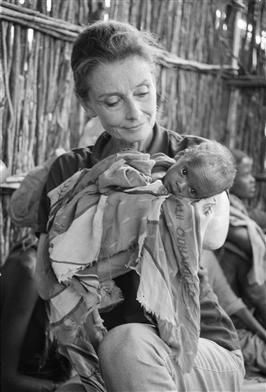
She took up acting because the malnutrition she suffered under the nazis permanently damaged her health and prevented her from pursuing her dream to be a ballerina. During the war, she danced to raise money for the resistance – even though she was literally starving, she used what strength she had to make sure more nazis got shot. 

She and her mom also denounced their royal heritage because of the Nazis in their family

Also Audrey was a humanitarian until her death, though ill with cancer, she continued her work for UNICEF, travelling to Somalia, Kenya, the United Kingdom, Switzerland, France and the United States.

These are things I literally never would have known about. I’m tired of women being painted as just being pretty.

I’M SO HAPPY TO SEE HER AT AN OLDER AGE I SWEAR!

girlfriendluvr:

loyisagoy-elgoycherev:

loyisagoy-elgoycherev:

why doesn’t anyone on here or leftbook talk about polish colonialism and polish fascism/nationalism 

my ancestors didn’t gtfo of occupied poland for nothing lol

polish nationalist (read: fascist) warlords after the collapse of the Russian Empire invaded countless places in Eastern Europe to “unite all Polish peoples” and for living space in much the same way the Nazis later invaded Poland 

they committed large scale ethnic cleansing of Belorussians, Ukrainians, Jews, Lithuanians, Rromani, and many other peoples which permanently redrew the ethnic map of Eastern Europe in a way that was only outdone by the Holocaust

like Eastern Europe used to be HUGELY ETHNICALLY DIVERSE but because of the chaos in the aftermath of the first world war and the Holocaust, Eastern Europe is now unrecognizably homogeneous compared to 1914 

so much was the dominant Polish warlord’s thirst for land to make the new Polish nation-state (hoped to be a bulwark against Bolshevism) that fucking Woodrow Wilson, the American President who was a major champion of the genocidal nation-state, thought it was too fucking much 

and during the Holocaust, Polish fascists collaborated with the Nazis to rid itself of its Jews–they were largely successful. after the Holocaust, they committed several pogroms to force the remaining survivors to flee. The socialist period of Poland I haven’t studied but as of now Poland is basically ruled by fash again. 

reckoning with this and really with the whole movement towards nation states which saw millions of Armenians, Assyrians, Mizrahim, Sephardim, Grecian Turks, Ottoman Greeks, and many many many others  expelled and killed is highly important

and then white goyische poles have the gall to say theyre oppressed for being eastern european

ao3tagoftheday:

I’ve now received 13 messages from people asking for more amusing historical facts. Therefore, I will list 13 facts and then I’m done with this game:

1. The Yucatan Penninsula was so named because a Spanish explorer asked an indigenous Mayan what the area was called and the Mayan said something that sounded to the Spaniard like “yucatan”. It actually meant “I don’t understand you.”

2. Lucius Cornelius Sulla, the first Roman dictator for life, had a male lover, a famous actor named Metrobius. The two of them seem to have first met when Sulla was a young man and their relationship continued for at least 30 years. When Sulla retired (from his life-long appointment, but that’s another story) Metrobius seems to have stayed with him until his death.

3. The Chinese characters and Japanese kanji writing system used to be much more similar than they are now, but after WWII, both systems were independently changed, so that many signs that once had the same meaning no longer have anything to do with each other.

4. Darius I, a Persian king, carved a huge monument on the side of a mountain. The text is basically a massive attempt to justify his seizure of the throne, which he seems to have done by killing one, or maybe two successive kings. He claims on the monument that the king he killed was actually a magician in disguise.

5. A Roman legion captured by the Parthians eventually ended up in China. The Chinese hired them as mercenaries and they founded a garrison town which the Chinese called Li-Jien.

6. The Mongols practiced religious toleration, on the basis that any religion could be right, so it was better to let all the different priests pray for the health of the Khan.

7. There was the Jewish rabbi in the early second century named Elisha ben Abuyah who was so troubled by the problem of suffering in the world that he became an atheist, went to Syria, wrote Greco-Roman philosophy, and was still considered such a great Jewish scholar that rabbinical students would sneak off to Syria to study with him.

8. The Phaistos disc exists. I can’t explain what it is in a few sentences, but it’s so weird and wonderful, so please look it up.

9. Human physical forms over the last 50,000 years have undergone an evolutionary process called pedomorphism, which is usually associated with domesticated animals. Since pedomorphic evolution indicates that an animal has become tame, and since there’s a good argument that humans have become progressively less violent over time, humans seem to have tamed ourselves.

10. Hawaiian Creole has words and grammar taken from English, Cantonese, Hawaiian, Portuguese, Korean, various Filipino indigenous languages, other Polynesian languages, and even another creole, Tok Pisin. It developed because children from various communities of workers in Hawaii all started talking to each other in a mix of their native languages.

11. During the Protestant Reformation, a bunch of Anabaptist radicals took over the city of Munster and ruled it for a few years. The story of this incident involves a former actor, a bunch of nuns, a prophesying smith, polygamy, and a couple of cannons named “The Devil” and “His Mother”.

12. Christian missionaries first arrived in Japan in 1549. About 70 years later, Japan was closed to foreigners and all Japanese Christians were forced to publicly renounce their faith. When Japan was opened again 200 years later, Christians visiting the country found Christian communities still practicing in secret.

13. There’s a hilarious Mayan comic strip painted on a vase, in which a rabbit steals the clothes of a merchant god. The merchant god goes to the chief of the gods to complain. The chief god insists that he doesn’t know where the rabbit is, while the rabbit leans out from behind the throne, waving one paw in the air.

I just spent half an hour checking my sources for this post, so I hope y’all are happy. Now stop sending me “lol here’s anon hate tell me a fact lol uwu” messages cause it’s getting tedious. Just kidding, ancient history is my special interest and I had fun sharing this with you, but it’s really not what this blog is for.

brunhiddensmusings:

jeneelestrange:

incorrectdiscworldquotes:

tilthat:

TIL of the “Tiffany Problem”. Tiffany is a medieval name—short for Theophania—from the 12th century. Authors can’t use it in historical or fantasy fiction, however, because the name looks too modern. This is an example of how reality is sometimes too unrealistic.

via reddit.com

“Authors can’t use it in fantasy fiction, eh? We’ll see about that…”

–Terry Pratchett, probably

Try to implement anything but a conservative’s sixth grade education level of medieval or Victorian times and you will butt into this. all. the. time. 

There was a literaly fad in the 1890′s for nipple rings for all genders(and NO, it was NOT under the mistaken belief that it would help breastfeeding–there’s LOTS of doctors’ writing at the time telling people to STOP and that they thought it would ruin the breast’s ability to breastfeed well, etc). It was straight up because the Victorians were freaks, okay
Imagine trying to make a Victorian character with nipple rings. IMAGINE THE ACCUSATIONS OF GROSS HISTORICAL INACCURACY

people just really, REALLY have entrenched ideas of what people in the past were like

tell them the vikings were clean, had a complex democratic legal system, respected women, had freeform rap battles, and had child support payments? theyd call you a liar

tell them that chopsticks became popular in china during the bronze age because street food vendors were all the rage and they wanted to have disposable eating utensils? theyll say youre making that up

tell them native americans had a trade network stretching from canada to peru and built sacred mounds bigger then the pyramids of giza? you are some SJW twisting facts

ancient egypt had circular saws, debt cards, and eye surgery? are you high?

our misconception of medieval peasants being illiterate and living in poverty in one room mud huts being their own creation as part of a century long tax aversion scam? you stole that from the game of thrones reject bin

iron age india had stone telescopes, air conditioning, and the number 0 along with all ‘arabic’ numbers including algebra and calculus? i understand some of those words.

romans had accurate maps detailing vacation travel times along with a star rating for hotels along the way, fast food restaurants, swiss army knives, black soldiers in brittany, traded with china, and that soldiers wrote thank-you notes when their parents sent them underwear in the mail? but they thought the earth was flat!

ancient bronze age mesopotamia had pedantic complaints sent to merchants about crappy goods, comedic performances, and transgender/nobinary representation? what are you smoking?

karadin:

shieldposts:

notlostonanadventure:

millenianthemums:

injygo:

flashdoggy:

radicalgendercoalition:

feminesque:

madgastronomer:

marxvx:

my night manager (who is a gay man) and i sometimes sit down and exchange stories and tidbits about our sexuality and our experiences in the queer cultural enclave. and tonight he and i were talking about the AIDS epidemic. he’s about 50 years old. talking to him about it really hit me hard. like, at one point i commented, “yeah, i’ve heard that every gay person who lived through the epidemic knew at least 2 or 3 people who died,” and he was like “2 or 3? if you went to any bar in manhattan from 1980 to 1990, you knew at least two or three dozen. and if you worked at gay men’s health crisis, you knew hundreds.” and he just listed off so many of his friends who died from it, people who he knew personally and for years. and he even said he has no idea how he made it out alive.

it was really interesting because he said before the aids epidemic, being gay was almost cool. like, it was really becoming accepted. but aids forced everyone back in the closet. it destroyed friendships, relationships, so many cultural centers closed down over it. it basically obliterated all of the progress that queer people had made in the past 50 years.

and like, it’s weird to me, and what i brought to the conversation (i really couldn’t say much though, i was speechless mostly) was like, it’s so weird to me that there’s no continuity in our history? like, aids literally destroyed an entire generation of queer people and our culture. and when you think about it, we are really the first generation of queer people after the aids epidemic. but like, when does anyone our age (16-28 i guess?) ever really talk about aids in terms of the history of queer people? like it’s almost totally forgotten. but it was so huge. imagine that. like, dozens of your friends just dropping dead around you, and you had no idea why, no idea how, and no idea if you would be the next person to die. and it wasn’t a quick death. you would waste away for months and become emaciated and then, eventually, die. and i know it’s kinda sophomoric to suggest this, but like, imagine that happening today with blogs and the internet? like people would just disappear off your tumblr, facebook, instagram, etc. and eventually you’d find out from someone “oh yeah, they and four of their friends died from aids.”

so idk. it was really moving to hear it from someone who experienced it firsthand. and that’s the outrageous thing – every queer person you meet over the age of, what, 40? has a story to tell about aids. every time you see a queer person over the age of 40, you know they had friends who died of aids. so idk, i feel like we as the first generation of queer people coming out of the epidemic really have a responsibility to do justice to the history of aids, and we haven’t been doing a very good job of it.

Younger than 40.

I’m 36. I came out in 1995, 20 years ago. My girlfriend and I started volunteering at the local AIDS support agency, basically just to meet gay adults and meet people who maybe had it together a little better than our classmates. The antiretrovirals were out by then, but all they were doing yet was slowing things down. AIDS was still a death sentence.

The agency had a bunch of different services, and we did a lot of things helping out there, from bagging up canned goods from a food drive to sorting condoms by expiration date to peer safer sex education. But we both sewed, so… we both ended up helping people with Quilt panels for their beloved dead.

Do the young queers coming up know about the Quilt? If you want history, my darlings, there it is. They started it in 1985. When someone died, his loved ones would get together and make a quilt panel, 3’x6’, the size of a grave. They were works of art, many of them. Even the simplest, just pieces of fabric with messages of loved scrawled in permanent ink, were so beautiful and so sad.

They sewed them together in groups of 8 to form a panel. By the 90s, huge chunks of it were traveling the country all the time. They’d get an exhibition hall or a gym or park or whatever in your area, and lay out the blocks, all over the ground with paths between them, so you could walk around and see them. And at all times, there was someone reading. Reading off the names of the dead. There was this huge long list, of people whose names were in the Quilt, and people would volunteer to just read them aloud in shifts.

HIV- people would come in to work on panels, too, of course, but most of the people we were helping were dying themselves. The first time someone I’d worked closely with died, it was my first semester away at college. I caught the Greyhound home for his funeral in the beautiful, tiny, old church in the old downtown, with the bells. I’d helped him with his partner’s panel. Before I went back to school, I left supplies to be used for his, since I couldn’t be there to sew a stitch. I lost track of a lot of the people I knew there, busy with college and then plunged into my first really serious depressive cycle. I have no idea who, of all the people I knew, lived for how long.

The Quilt, by the way, weighs more than 54 tons, and has over 96,000 names. At that, it represents maybe 20% of the people who died of AIDS in the US alone.

There were many trans women dying, too, btw. Don’t forget them. (Cis queer women did die of AIDS, too, but in far smaller numbers.) Life was and is incredibly hard for trans women, especially TWOC. Pushed out to live on the streets young, or unable to get legal work, they were (and are) often forced into sex work of the most dangerous kinds, a really good way to get HIV at the time. Those for whom life was not quite so bad often found homes in the gay community, if they were attracted to men, and identified as drag queens, often for years before transitioning. In that situation, they were at the same risk for the virus as cis gay men.

Cis queer women, while at a much lower risk on a sexual vector, were there, too. Helping. Most of the case workers at that agency and every agency I later encountered were queer women. Queer woman cooked and cleaned and cared for the dying, and for the survivors. We held hands with those waiting for their test results. Went out on the protests, helped friends who could barely move to lie down on the steps of the hospitals that would not take them in — those were the original Die-Ins, btw, people who were literally lying down to die rather than move, who meant to die right there out in public — marched, carted the Quilt panels from place to place. Whatever our friends and brothers needed. We did what we could.

OK, that’s it, that’s all I can write. I keep crying. Go read some history. Or watch it, there are several good documentaries out there. Don’t watch fictional movies, don’t read or watch anything done by straight people, fuck them anyway, they always made it about the tragedy and noble suffering. Fuck that. Learn about the terror and the anger and the radicalism and the raw, naked grief.

I was there, though, for a tiny piece of it. And even that tiny piece of it left its stamp on me. Deep.

2011

A visual aid: this is the Quilt from the Names Project laid out on the Washington Mall

image

I was born (in Australia) at the time that the first AIDS cases began to surface in the US. While I was a witness after it finally became mainstream news (mid-85), I was also a child for much of it. For me there was never really a world Before. I’m 35 now and I wanted to know and understand what happened. I have some recommendations for sources from what I’ve been reading lately:

I don’t think I can actually bring myself to read memoirs for the same reason I can’t read about the Holocaust or Stalinist Russia any more. But I have a list: 

Read or watch The Normal Heart. Read or watch Angels in America. Read The Mayor of Castro Street or watch Milk. Dallas Buyers Club has its issues but it’s also heartbreaking because the characters are exactly the politically unsavory people used to justify the lack of spending on research and treatment. It’s also an important look at the exercise of agency by those afflicted and abandoned by their government/s, how they found their own ways to survive. There’s a film of And the Band Played On but JFC it’s a mess. You need to have read the book.

Some documentaries:

Everyone should read about the history of the AIDS epidemic. Especially if you are American, especially if you are a gay American man. HIV/AIDS is not now the death sentence it once was but before antiretrovirals it was just that. It was long-incubating and a-symptomatic until, suddenly, it was not.

Read histories. Read them because reality is complex and histories attempt to elucidate that complexity. Read them because past is prologue and the past is always, in some form, present. We can’t understand here and now if we don’t know about then.

*there are just SO MANY people I want to punch in the throat.

They’ve recently digitized the Quilt as well with a map making software, I spent about three hours looking through it the other day and crying. There are parts of it that look like they were signed by someone’s peers in support and memoriam, and then you realize that the names were all written in the same writing.

That these were all names of over 20 dead people that someone knew, often it was people who’d all been members of a club or threatre group.

Here’s the link to the digitization:
http://research.microsoft.com/en-us/um/redmond/projects/aidsquilt/

As well, there are numerous people who were buried in graves without headstones, having been disenfranchised from their families.
I read this story the other day on that which went really in depth (I would warn that it highlights the efforts of a cishet woman throughout the crisis):
http://arktimes.com/arkansas/ruth-coker-burks-the-cemetery-angel/Content?oid=3602959

I’ve had several conversations recently with younger guys for whom this part of our history isn’t well known. Here are some resources for y’all. Please, take care of one another.

http://www.aidsquilt.org/view-the-quilt/search-the-quilt

Updated link to the quilt

this is so hard to read or even think about but… it’s so important. it’s so important to understand just the …overwhelming SCALE of this. how many people died while the government did NOTHING.

Reblogging for pride

Never forget your fallen. Your people were nearly annihilated in an epidemic. Never forget how lucky we are, never forget how they tried to let us die.

I shadowed a doctor who was a resident during the AIDS crisis. He volunteered to work on the AIDS floor. It was volunteer unlike most areas, because medical staff were afraid of catching it and they still didn’t understand it.

He said it was one of the word things he had ever seen, a whole floor of young men dying. Every week the obituaries would come out and there would be dozens of names of been in their 20s and 30s. They never said what that died of, but you could tell.

Many of the Republicans in power now were around back then, and they laughed at the idea of a queer plague.