I love how he let him cry, told him, “We cry as men” and didn’t hit him with the whole, “Big boys don’t cry” mess. That was lovely.
Phenomenal. Allowed him to emote, then worked with him to understand the what and the why.
This gave me chills; this man is a true teacher. Children are definitely intelligent enough to understand the hard truths of life if you are intelligent and patient enough to know how to teach it to them. This is such an amazing example of respect to this kid’s emotions and maturation that you don’t always see adults extending to a young person.
“This, I say. This and this. The way his hair looked in summer sun. His face when he ran. His eyes, solemn as an owl at lessons. This and this and this. So many moments of happiness, crowding forward.”
I’ve now received 13 messages from people asking for more amusing historical facts. Therefore, I will list 13 facts and then I’m done with this game:
1. The Yucatan Penninsula was so named because a Spanish explorer asked an indigenous Mayan what the area was called and the Mayan said something that sounded to the Spaniard like “yucatan”. It actually meant “I don’t understand you.”
2. Lucius Cornelius Sulla, the first Roman dictator for life, had a male lover, a famous actor named Metrobius. The two of them seem to have first met when Sulla was a young man and their relationship continued for at least 30 years. When Sulla retired (from his life-long appointment, but that’s another story) Metrobius seems to have stayed with him until his death.
3. The Chinese characters and Japanese kanji writing system used to be much more similar than they are now, but after WWII, both systems were independently changed, so that many signs that once had the same meaning no longer have anything to do with each other.
4. Darius I, a Persian king, carved a huge monument on the side of a mountain. The text is basically a massive attempt to justify his seizure of the throne, which he seems to have done by killing one, or maybe two successive kings. He claims on the monument that the king he killed was actually a magician in disguise.
5. A Roman legion captured by the Parthians eventually ended up in China. The Chinese hired them as mercenaries and they founded a garrison town which the Chinese called Li-Jien.
6. The Mongols practiced religious toleration, on the basis that any religion could be right, so it was better to let all the different priests pray for the health of the Khan.
7. There was the Jewish rabbi in the early second century named Elisha ben Abuyah who was so troubled by the problem of suffering in the world that he became an atheist, went to Syria, wrote Greco-Roman philosophy, and was still considered such a great Jewish scholar that rabbinical students would sneak off to Syria to study with him.
8. The Phaistos disc exists. I can’t explain what it is in a few sentences, but it’s so weird and wonderful, so please look it up.
9. Human physical forms over the last 50,000 years have undergone an evolutionary process called pedomorphism, which is usually associated with domesticated animals. Since pedomorphic evolution indicates that an animal has become tame, and since there’s a good argument that humans have become progressively less violent over time, humans seem to have tamed ourselves.
10. Hawaiian Creole has words and grammar taken from English, Cantonese, Hawaiian, Portuguese, Korean, various Filipino indigenous languages, other Polynesian languages, and even another creole, Tok Pisin. It developed because children from various communities of workers in Hawaii all started talking to each other in a mix of their native languages.
11. During the Protestant Reformation, a bunch of Anabaptist radicals took over the city of Munster and ruled it for a few years. The story of this incident involves a former actor, a bunch of nuns, a prophesying smith, polygamy, and a couple of cannons named “The Devil” and “His Mother”.
12. Christian missionaries first arrived in Japan in 1549. About 70 years later, Japan was closed to foreigners and all Japanese Christians were forced to publicly renounce their faith. When Japan was opened again 200 years later, Christians visiting the country found Christian communities still practicing in secret.
13. There’s a hilarious Mayan comic strip painted on a vase, in which a rabbit steals the clothes of a merchant god. The merchant god goes to the chief of the gods to complain. The chief god insists that he doesn’t know where the rabbit is, while the rabbit leans out from behind the throne, waving one paw in the air.
I just spent half an hour checking my sources for this post, so I hope y’all are happy. Now stop sending me “lol here’s anon hate tell me a fact lol uwu” messages cause it’s getting tedious. Just kidding, ancient history is my special interest and I had fun sharing this with you, but it’s really not what this blog is for.
SO I did a lesbian flag redesign because really the community doesn’t actually have one that works really well on a number of levels and represents the full spectrum of lesbianism
The pink flag is… pretty. But it’s also not the ‘lesbian’ flag. It’s the lipstick lesbian flag with the lipstick removed, and it’s kind of messed up that we would take that and try to apply it to the whole community.
It’s also next to impossible to make physical copies of it in a lot of things. Artwork is easy enough, but do you know how hard it is to find that many shades of pink for things like hoodies, scarves, hats, etc?
So here’s my redesign:
Each stripe represents both a part of the lesbian community itself, and part of the history of it.
Purple is for Non binary and trans lesbians, and to represent the violets that were given between women to represent their love.
Pink is for Lipstick and femme lesbians, and to represent the beauty of feminine love
Grey is for ace lesbians, and to represent the difficulty navigating the ‘grey area’ of society, where our love was forbidden and is still rejected by society
Blue is for butch and he/him lesbians, and also represents the way Lesbianism subverts gender norms within society, and the rejection of those norms.
Each stripe represents both members of the community, and how our community exists in society.
Not to critique evolution, but I would think orange and black stripes wouldn’t be as good for camouflage in a forest as, say, green and black would.
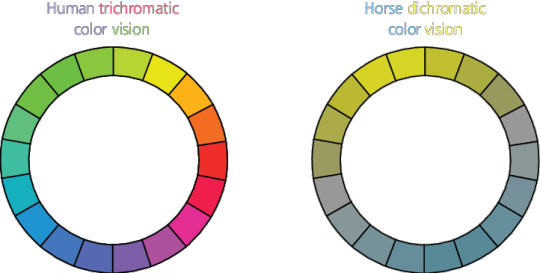
It turns out a lot of animals can’t see the difference between orange and green! Elephants, for instance, have dichromatic vision (two types of cones, rather than three like most humans.)
Check out this diagram from ResearchGate. It deals with the color vision of horses, who are also generally dichromatic. (I think, though I’m not sure, that zebras would have the same color vision as horses.) See how orange and green look to them?
Not to critique evolution but I think prey animals should be better at telling when their predator is dressed like a traffic cone.
It doesn’t matter what zebras see, because tigers are not native to Africa and do not naturally hunt zebra. Tigers are Asian and mostly hunt animals like deer, elk, and buffalo. These aren’t animals with great color vision. They don’t need to have it because they don’t eat fruit and so don’t need to know when the berry is ripe vs when it’s not. Good color vision is too expensive to have if you don’t need it. Deer put their vision stats in a wide field of vision that is sensitive to motion, low light capabilities, and possibly seeing UV light. They don’t have great color and lack a lot of acuity, but have a great sense of smell and good hearing. That’s way more useful if you’re prey. Deer see well in the blue end of the color spectrum and less well in the red. This makes sense because deer are most active in the dawn and dusk periods, when there is more blue in the light. Tigers are taking advantage of deer eyesight by being orange.
We see tigers are being obviously colored because tigers are fruit colored to our tree ape brains.
I don’t know what the best part of this is: implying that deer chose their attributes on a character sheet, or the fact that we get to see tiger colors because they look like a snack.
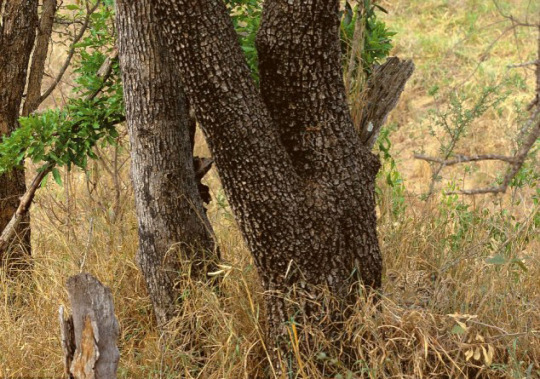
Ok but like, I think you underestimate just how well they blend in when actually in the environment. Like, just using tigers as an example.
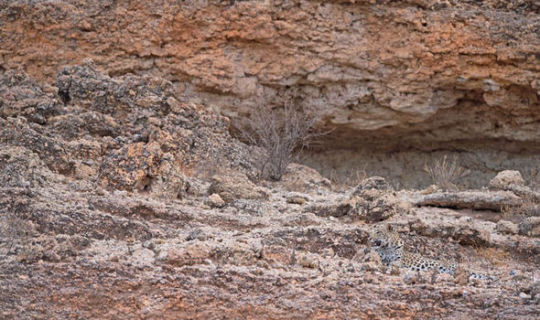
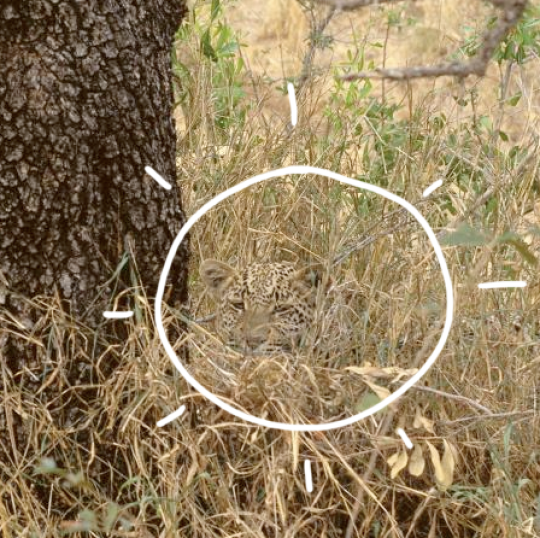
or how about a leopard?
It’s called ‘disruptive colouration’ because the markings help to break up the animal’s outline against the grasses or rocks. And the rosettes on leopards and jaguars? Sun spots shining through the trees and leaves on the ground.
And this is how hard it is to spot them WITH colour vision. Now imagine the above images but with the limited coloured mentioned above?
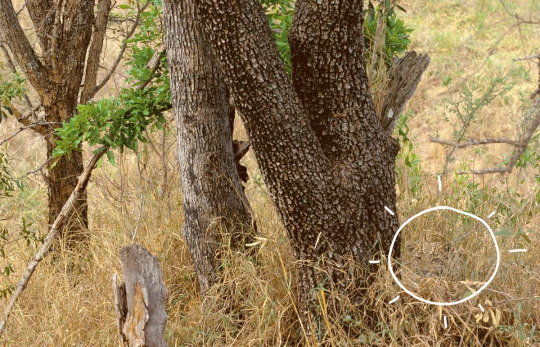
I’m sorry but there is not an animal in that first leopard picture
Are you, sure about that?
“Tigers are fruit colored” is my new favorite phrase.






 teakepp