First, you have to find the crows. If the crows don’t live there you
probably won’t find them. Second, you must remember that while they are
urban wildlife that have lived near humans for millennia, they are still
wild life and are to be respected and not to be commanded or captured. Crows do not owe you anything. They don’t owe you friendship and they don’t owe you their secrets.
I live in Portland, Oregon. We have crows the same way some cities have pigeons, they are everywhere and I love them. Ian B
and I had serious conversations 5 or 6 years ago when I first wanted to
get to know the crows in our neighborhood about how smart they are and how I shouldn’t give
them peanuts all the time because they would identify me and become
demanding.
I first
started feeding them on a specific corner half a block away so as to not use my
house as a the base. I saw that they would hang out on power lines and I would jingle my keys or make a specific sound with my mouth and then leave the peanuts on the corner curb. Crows will notice patterns so I gave them a patters of sound and place to associate with the peanuts. Crows are incredibly bold and at times daring, but they are very wary of new things. Give them some time for them to associate you with the treats. Once they associate you with the peanuts they could become curious about you as a friendly human.
I have met several generations of these crows and they have brought me gifts of small trinkets. They hang out on the wall across from my house and they hang out on the power lines while I work in the yard. My indoor/outdoor cat is afraid of them, but the crows have learned to leave him alone. I’ve gone outside with JackieCat and scooped him up to show the crows that I can handle the cat.
I work about a mile from my house and when walk or ride my bike to work I know each different family of crows along the way. They all have distinct personalities and even variations in their calls. Some are more chatty or aggressive or playful. One of them will fly right next to me down the street when I ride my bike. With each generation the younger crows are taught that I am a friend and source of food. I love their goofy awkward “feed me” calls as they are learning how to be a crow. You can spot young crows because there is still a pink webbing where their beak meets and they will beg for food from parents or helpers because that was how they were fed in the nest.
Listen to their calls and see if you can distinguish between alarm calls or friendly calls. Crows are also capable of mimicking sounds. They could mimic the sound you make. I’ve even heard one mimic a dog bark to a dog when it got too close to a peanut!
Watch the crows. see their family dynamics. The crows will also be watching you. Do not trick crows because they will remember.
🔹 Chamomile (helps combat insomnia, a common symptom of depression) 🔹 Green (contains an amino acid known as theanine which is known to fight depression) 🔹 St John’s Wort (contains compounds known as hypericin and hyperforin, which may affect activity of the brain’s serotonin system) 🔹 Lemon Balm (works as a mild sedative and can ease anxiety and depression) 🔹 Ginger Root (helps to increase important neurotransmitters than can regulate your mood) 🔹 Lavender (research shows that lavender can help combat depression, and has been said to rival antidepressants) 🔹 Peppermint (the menthol in peppermint leaves helps calm mood and aides sleep)
💎
CRYSTALS
💎
🔹 Smoky Quartz (helps elevate moods, overcome negative emotions, and relieves depression) 🔹 Rose Quartz (is a known healer and can help replace negative feelings with love and compassion) 🔹 Amethyst (combats stress and releases a relaxed energy) 🔹 Citrine (emits a sunny, optimistic energy which can aide in combating depression and anxiety) 🔹 Angel Aura Quartz (is known to help with mental illness, and it’s energy can help process emotional disturbances, grief, or trauma)
🕯️
INCENSE
🕯️
🔹 Lavender (reduces stress physically and mentally, and promotes deep sleep) 🔹 Jasmine (helps with alertness, evokes an uplifting energy, and is believed to ease symptoms of depression) 🔹 Ylang Ylang (has a calming affect that elevates mood and is known to help with physical and mental symptoms of anxiety and depression) 🔹 Lemongrass (promotes emotional balance, and uplifts emotional weight) 🔹 Sandalwood (encourages calmness, serenity, and feelings of well being)
🔹 Spend time in the sun, and in nature. Even if you only go and sit in your backyard, it will help, and make you feel a bit better 🔹 Drink water! LOTS OF WATER! Want an extra boost? Make a bunch of sun water and drink it on exceptionally low days to help with your energy and mood levels. 🔹 Ground yourself every night before bed to rid yourself of negative energies 🔹 Turn your sadness into creativity! Work on pages of your grimoire or book of shadows. Do some witchy DIY’s! Set up a new altar! Make some sigils! Being productive and creative are so helpful when you’re feeling melancholic. 🔹 Have some spoonie witch tips for low energy days! 🔹 Garden. Spending time in nature and creating something within the earth is not only rewarding, but gardening is actually a de-stressing activity and can soothe your mood. PLUS think of all the herbs you could grow to help with your craft! 🔹 Talk to someone. Other witches. Friends. A professional. A hotline. Anyone who is willing to listen. Put that energy out there and it will make a world of difference, I promise. 🔹 Let yourself have at least ONE self-care day a week. It doesn’t matter what it entails, as long as you’re taking that time for YOURSELF, magickal or not.
Love this list. Just be mindful with the teas and check with your doctor first before drinking them, especially if you are on meds, in particular antidepressants, as the herbal teas can conflict with them.
^^ Adding on, St. John’s Wort conflicts with antidepressants and can cause serotonin syndrome which results in an unpleasant trip to the hospital. Read the labels on calming tea blends before ingesting!
St. John’s Wort can also lessen the effect of birth control
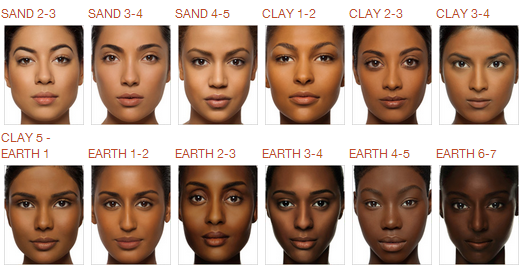
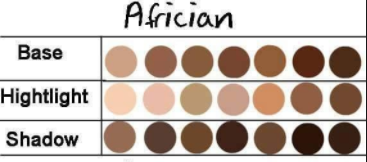
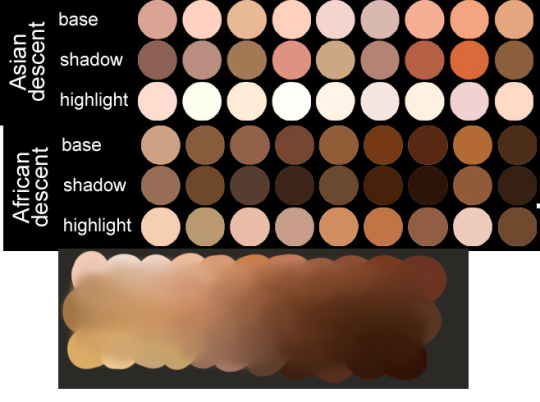
if you’re doing black edits of a character please please please use a color palette for reference so your edit doesn’t end up looking racist (like orange/red) here are some good ones
hi, angels! here is a big masterpost of some of my personal favourite themed playlists on Spotify that i’ve made over time. i will add to it as time goes by! and if you have any really specific ideas for a themed playlist i should make, feel free to drop a suggestion by replying to this post. ♡ xoxo
Oh heckin yes I do My amazon wishlist is literally like six pages long… ALL BOOKS
WARNING: This Is Going To Be Extremely Long!
First though I want to note that while I 100% understand your feelings about the Wicca stuff (being a very NOT Wiccan Witch), not all books that are Wicca leaning are bad! I’ve gotten loads of useful information from books that tended to be a little new agey. That’s where being objective comes in! With ANY book, you should take it with a grain of salt, and some with a whole shaker. But it’s up to you to pay attention to misinformation and conflation, and to know how to do research to prove or disprove that something in a book you read is true or not. Does that make sense??
Anywho, a couple of books that are still kind of “Wicca-y” but great:
(This author is pretty good about keeping away but there’s still some slips)
The Big Book of Practical Spells(Written by Judika Illes, who did the Encyclopedia of 5,000 Spells; it’s a good book, but there’s too much Cultural appropriation for my taste. Tread Lightly, and bring that shaker I was talking about)
Those are all books from my personal collection that I would recommend! Now as for the Non-Wicca Books, Let’s dive in! Not all of these have I read or owned, and they are in no particular order. You’ll notice most of them relate to “Traditional Witchcraft” or West Country, because that is where my practice is focused.
In the conclusion for now, some things I’d really recommend doing if you’re seriously considering making a webcomic (or really a comic in general). Some of these don’t really apply to strips or gag-a-day type of comics, but I’m not talking about those here.
1. Write down ideassketch stuff, LEGIBLY. “I’m gonna remember it later” NEVER works. And if you scribble it somewhere on a piece of paper, you’d better scan it or retype in one doc later, because tiny notes always get lost among other doodles in my skethbooks.
(i know it’s hard to keep everything clean and organized, but this mess is just not productive)
If your project is a collaboration, save your conversations. If you’re working alone, make a blog for your ramblings. You have no clue what tears of relief I cry when I open that blog and rememeber I don’t have to painstakingly look through my heaps of sketchbooks and folders for a tiny idea I’m not even sure I wrote down a few months ago.
2. Inspiration folders, or even better, inspo blog with tags also help with collecting and remembering ideas. Color schemes, landscapes, style inspirations, atmospheric stuff, maybe some photo references, all those neat things.
3. Basic tier: character design sheets. Top tier: common poses, expressions. God tier: outfits they wear throughout the comic. Holy cow tier: turnaround sheets for all those outfits.
(I’d die trying to find good pages for references without these)
4. If you haven’t finished detailing the plot, don’t even think about moving on to drawing the comic. You’re gonna regret it when you come up with a really cool plot element that can’t be incorporated anymore because you’ve already drawn all the parts you could’ve tweaked.
5. Don’t just define the plot, make a script. Writing down the lines and the brief description of the actions serves me fine:
(notice that I approximately divided the pages & the text that’d go to each panel on a page)
6. Hard mode: make thumbnails for all the pages, if possible. At least whenever a new chapter starts.
7. If your story involves some convoluted chronology shenanigans, you’d better write down the events of your timeline in the chronological order.
8. Backgrounds. You can’t avoid them, bro. Like half of the comics are backgrounds, especially if your story involves a lot of adventuring and looking around. I know it hurts, but you’ll have to become friends with them. Read some tutorials, practice on photos, go out and sketch some streets, use 3d programs (like Google Sketch) to understand the perspective, use sites like houseplans to visualize your buildings
better, I don’t know. Just be prepared for their imminent evil.
9. If you’re drawing digitally, pick a brush size for the lines and stick with it. You don’t want your lines and detail levels to look all wonky and inconsistent in different panels. And I don’t mean the cool stylistic varying lines, I mean this:
Also, things on the background should have thinner and/or lighter lines to avoid distraction. Usually less details too, unless you’re making a busy background with a simple foreground to help it pop out. Or wanna draw the attention to an object on the bg.
10. Readable fonts. Even if you chose to ignore people with poor sight or dyslexia, the majority of your readers aren’t gonna be excited about struggling to decypher this:
Also, as much as I love my black speech bubbles, colorful text on black still kinda hurts the eyes. I wouldn’t recommend doing that for all the characters. Black speech bubbles are usually used for creepy, inhuman voices. And yes, having a colorful outline in this case helps.
11. Probably newsflash, but did you know that panels have their place, order and functions? They do! My favourite thing ever is how I used panels when I was like 12:
(comics ain’t rocket science, but this one is)
The composition of the panels and word balloons always serve for a better reading experience. They guide your eyes over the page, so that you never feel lost or confused. The images in the comic equal frames in a movie, so it’s pretty damn important in what order you look at things and how quickly you can understand what’s going on!
(Eric Shanower & Scottie Young’s Wizard of Oz)
12. One update a week is fine for testing waters. Don’t overestimate yourself, especially if you have a pretty busy life outside it. A stable comic that updates slowly, but regularly is better than an unpredictable erratic one. You can always pick up the pace later, if you feel confident enough.
13. Try to always have a buffer – a couple of pages in reserve. If you’re making the pages much faster than you’re updating, this shouldn’t be a problem. But if those paces are equally the same, it’s goddamn HARD. But on the other hand, if something happens and you skip an update, those come in handy.
If you’re looking at this list and thinking “wow that’s a LOT of work”, you’re totally right. And it’s okay to be intimidated at first! But that’s why it’s important to start with something small. Once you get the formula down, these things will be natural to you.
Here’s some considerations for the tiny little details that can add a lot to a character. Figuring out these mannerisms can do a lot for conveying character traits through their normal actions rather than just their thoughts, dialogue, etc.
How’s their posture? There are more options than just sitting up straight or slouching a lot. What’s their most comfortable sitting position? Do they have a consistent posture or does it change depending on situation / present company?
How’s their etiquette? Do they hold the door for people behind them? How do they handle handshakes and other kinds of typical contact? Does their language change or become more formal when speaking to strangers? To their elders? To their superiors?
In a crowded space, do they get out of people’s way, or do people get out of THEIR way?
How do they point something out? Pointing their finger? Nodding their head? A flippant wave of the hand?
What are their comfort gestures or self-touch gestures? Common comfort gestures include rubbing the back of the neck or gripping their own arms. Can they suppress these gestures or do they do them often?
Also consider the character’s common reactions to common emotions. Do they whoop when they’re excited? Do they tremble when angry?
What parts of the body are the most expressive? Do they shuffle and stomp their feet a lot when agitated or excited? Are they a hand talker? Do they have an impressive range of motion with their eyebrows?
How do they sound? Do their car keys jingle as they walk? Do they drag their feet? Do their heels clack resoundingly on hard floors? Do they breathe loudly? Do they fidget in ways that make a lot of noise?
How do they handle eye contact?
Any behaviors they reserve for moments when they’re alone? (Or possibly among family/friends that don’t care?) Do they pick their nose? Do they bite their toenails? Do they sniff their armpits? Or do they not care if people see behavior like this?
Apart from comfort gestures, what else do they do to comfort themselves in trying times? What’s their go-to self care? What’s their comfort food? Where’s their safe space?
What are they doing with themselves as they’re suppressing emotion? Lip biting, fist clenching, and avoiding eye contact are common methods of coping with strong emotions.





 teakepp