if you’re american and coming to australia, I’m gonna go ahead and say that you should be 100 percent way more worried about being king hit by a dude named “dane” in a bintang singlet than any fucking spiders that exist here
what does this say in english
“Good sir, if you are a resident of the United States of America and coming to visit the sunny land of Australia, allow me to inform you that you should be rather more concerned about being sucker punched by a gentleman named ‘Dane’ who is likely to be seen wearing a wifebeater with a beer company logo on it than by any of the dangerous spiders that exist on this lovely continent”.
ok so what does it say in american
“You’re more likely to get sucker punched/cold-cocked by an asshole than you are to be bitten by a spider”.
thank you
Well rattle my spoons, that don’t make a lick of sense. Wot in tarnation does this hootenanny say?
“If ya mosey on by Australia, you best be fixin’ to get to some fisticuffs more’n checkin fer spiders.”
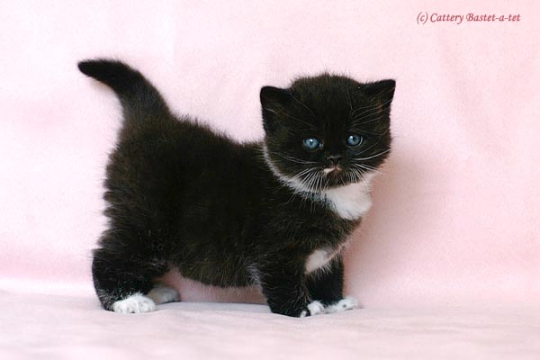
In Austria, we call kittens at that age “Autodromkatzerl”, which translates to “bumper car kittens”, because of the way their tail sticks up. It’s not a really common word, but a very cute one, I think
this is a genuinely delightful bit of knowledge, thank you for sharing this!! omg
I just did a quick perusal of the Coptic resources on this site, and it has all the resources I’ve personally found worthwhile and then some. These are resources that took me months, if not years, to discover and compile. I am thoroughly impressed. The other languages featured on the site are:
Akkadian
Arabic
Aramaic
Church Slavonic
Egyptian (hieroglyphics and Demotic)
Elamite
Ethiopic (Ge’ez)
Etruscan
Gaulish
Georgian
Gothic
Greek
Hebrew
Hittite
Latin
Mayan (various related languages/dialects)
Old Chinese
Old English
Old French
Old Frisian
Old High German
Old Irish
Old Norse
Old Persian
Old Turkic
Sanskrit
Sumerian
Syriac
Ugaritic
For the love of all the gods, if you ever wanted to learn any of these languages, use this site.
Likely helpful for various recon-oriented polytheists.
I looked it up out of excitement; it’s called “ili”, and it was created by a Japanese company called Logbar.
It costs $249. It supports English, Spanish, Japanese, and Mandarin (for now). It comes with one language, but new languages can be added with updates.
General sales will begin this November, but you can join their waitlist/ learn more information here on their website: https://iamili.com/
Latin has this word, sic. Or, if we want to be more diacritically accurate, sīc. That shows that the i is long, so it’s pronounced like “seek” and not like “sick.”
You might recognize this word from Latin sayings like “sic semper tyrannis” or “sic transit gloria mundi.” You might recognize it as what you put in parentheses when you want to be pass-agg about someone’s mistakes when you’re quoting them: “Then he texted me, ‘I want to touch you’re (sic) butt.’”
It means, “thus,” which sounds pretty hoity-toity in this modren era, so maybe think of it as meaning “in this way,” or “just like that.” As in, “just like that, to all tyrants, forever,” an allegedly cool thing to say after shooting a President and leaping off a balcony and shattering your leg. “Everyone should do it this way.”
Anyway, Classical Latin somewhat lacked an affirmative particle, though you might see the word ita, a synonym of sic, used in that way. By Medieval Times, however, sic was holding down this role. Which is to say, it came to mean yes.
Ego: Num edisti totam pitam?
Tu, pudendus: Sic.
Me: Did you eat all the pizza?
You, shameful: That’s the way it is./Yes.
This was pretty well established by the time Latin evolved into its various bastard children, the Romance languages, and you can see this by the words for yes in these languages.
In Spanish, Italian, Asturian, Catalan, Corsican, Galician, Friulian, and others, you say si for yes. In Portugese, you say sim. In French, you say si to mean yes when you’re contradicting a negative assertion (”You don’t like donkey sausage like all of us, the inhabitants of France, eat all the time?” “Yes, I do!”). In Romanian, you say da, but that’s because they’re on some Slavic shit. P.S. there are possibly more Romance languages than you’re aware of.
But:
There was still influence in some areas by the conquered Gaulish tribes on the language of their conquerors. We don’t really have anything of Gaulish language left, but we can reverse engineer some things from their descendants. You see, the Celts that we think of now as the people of the British Isles were Gaulish, originally (in the sense that anyone’s originally from anywhere, I guess) from central and western Europe. So we can look at, for example, Old Irish, where they said tó to mean yes, or Welsh, where they say do to mean yes or indeed, and we can see that they derive from the Proto-Indo-European (the big mother language at whose teat very many languages both modern and ancient did suckle) word *tod, meaning “this” or “that.” (The asterisk indicates that this is a reconstructed word and we don’t know exactly what it would have been but we have a pretty damn good idea.)
So if you were fucking Ambiorix or whoever and Quintus Titurius Sabinus was like, “Yo, did you eat all the pizza?” you would do that Drake smile and point thing under your big beefy Gaulish mustache and say, “This.” Then you would have him surrounded and killed.
Apparently Latin(ish) speakers in the area thought this was a very dope way of expressing themselves. “Why should I say ‘in that way’ like those idiots in Italy and Spain when I could say ‘this’ like all these cool mustache boys in Gaul?” So they started copying the expression, but in their own language. (That’s called a calque, by the way. When you borrow an expression from another language but translate it into your own. If you care about that kind of shit.)
The Latin word for “this” is “hoc,” so a bunch of people started saying “hoc” to mean yes. In the southern parts of what was once Gaul, “hoc” makes the relatively minor adjustment to òc, while in the more northerly areas they think, “Hmm, just saying ‘this’ isn’t cool enough. What if we said ‘this that’ to mean ‘yes.’” (This is not exactly what happened but it is basically what happened, please just fucking roll with it, this shit is long enough already.)
So they combined hoc with ille, which means “that” (but also comes to just mean “he”: compare Spanish el, Italian il, French le, and so on) to make o-il, which becomes oïl. This difference between the north and south (i.e. saying oc or oil) comes to be so emblematic of the differences between the two languages/dialects that the languages from the north are called langues d’oil and the ones from the south are called langues d’oc. In fact, the latter language is now officially called “Occitan,” which is a made-up word (to a slightly greater degree than that to which all words are made-up words) that basically means “Oc-ish.” They speak Occitan in southern France and Catalonia and Monaco and some other places.
The oil languages include a pretty beefy number of languages and dialects with some pretty amazing names like Walloon, and also one with a much more basic name: French. Perhaps you’ve heard of it, n’est-ce pas?
Yeah, eventually Francophones drop the -l from oil and start saying it as oui. If you’ve ever wondered why French yes is different from other Romance yeses, well, now you know.
I guess what I’m getting at is that when you reblog a post you like and tag it with “this,” or affirm a thing a friend said by nodding and saying “Yeah, that”: you’re not new
This is really great and I want you all to know that I tried so hard to not chime in with this, but ‘do’ in Welsh does not simply mean ‘yes’ or ‘indeed’. Welsh has a shit tonne of different ways of saying yes, because they’re all tense based, so like
Oes – yes it is/there are
Ydw – yes I am
Oedd – yes he/she/it was
and so on. So ‘do’ (long ‘o’, like in ‘door’) means ‘yes _ did’. Any person. Plus, I’ve never heard of it being used for ‘indeed’ – for that we use ‘yn wir’ (in truth). However, different dialects do of course exist and I fully accept that it’s entirely possible that the people of Very West Wales are running around using ‘do’ to mean indeed because I mean look at them.
Thank you! I was really hoping you would see this and comment, because I wanted to say exactly this when I saw this post yesterday, but thought it would be better coming from someone rather more fluent than myself
Thedan Script – used extensively by Gardnerian Witches Runic Alphabets – they served for divinatory and ritual purposes, as well as the more practical use; there are three main types of Runes; Germanic, Scandinavian/Norse, and Anglo-Saxon and they each have any number of variations, depending on the region from which they originate Celtic and Pictish – early Celts and their priests, the Druids, had their own form of alphabet known as “Ogam Bethluisnion”, which was an extremely simple alphabet used more for carving into wood and stone, than for general writing, while Pictish artwork was later adopted by the Celts, especially throughout Ireland Ceremonial Magick Alphabets – “Passing the River”, “Malachim” and “Celestial” alphabets were used almost exclusively by ceremonial magicians
no offense to people named aaron but who the fuck decided two a’s were necessary??? now i can’t converse with someone named aaron without calling them a-aron
not to be That Bitch but it’s another example of an anglicized disaster of a name from biblical hebrew, which was aharon and imo infinitely more badass than aaron
others in this cursed category: elisheva (elizabeth), yirmiyahu (jeremy), mikha-el (michael), matisyahu (matthew), shoshana (susanna)
you really are that bitch huh i feel educated as fuck right now
Honestly, as a German I can not quite understand the obsession of the English speaking world with the question whether a word exists or not. If you have to express something for which there is no word, you have to make a new one, preferably by combining well-known words, and in the very same moment it starts to exist. Agree?
Deutsche Freunde, could you please create for me a word for the extreme depression I feel when I bend down to pick up a piece of litter and discover two more pieces of litter?
um = around
die Welt = world
die Umwelt = environment
ver = prefix to indicate something difficult or negative, a change that leads to deterioration or even destruction that is difficult to reverse or to undo, or a strong negative change of the mental state of a person
der Müll = garbage, trash, rubbish, litter
-ung = -ing
die Vermüllung = littering
ver- = see before
zweifeln = to doubt
-ung = see before
die Verzweiflung = despair, exasperation, desperation
Today while reading an article in Spanish I encountered the word burguesa and I didn’t know what it meant but my first thought was that it sounded like the word hamburguesa which made me laugh. I learned that it meant bourgeois and I started thinking about it how hamburguesa (or hamburger)was borrowed from German and named after the city of Hamburg, and then I did a little bit of research and found out that the German suffix –burg and the French word bourgeois both came from Proto-Germanic *burgz.
So it turns out that the words actually are related, and while I didn’t make much progress in writing the Spanish paper I was supposed to be working on, I learned something new and ended up inadvertently studying for my Historical Linguistics final in the process, so it all worked out in the end.
It’s true. A “burg” is a city, and the term “burger” (or bourger or whatever), which is where “bourgeoisie” comes from, originally meant a city-dweller, referring especially to merchants and shopkeepers. Eventually the merchant class started rising in prominence with the development of capitalism and became the wealth-generating class that we know them as today.
The connection to the food hamburger simply comes from the fact that burg means city and Hamburg is a city – the city of ham, basically. So it’s really part coincidence and part etymology.
I just did a quick perusal of the Coptic resources on this site, and it has all the resources I’ve personally found worthwhile and then some. These are resources that took me months, if not years, to discover and compile. I am thoroughly impressed. The other languages featured on the site are:
Akkadian
Arabic
Aramaic
Church Slavonic
Egyptian (hieroglyphics and Demotic)
Elamite
Ethiopic (Ge’ez)
Etruscan
Gaulish
Georgian
Gothic
Greek
Hebrew
Hittite
Latin
Mayan (various related languages/dialects)
Old Chinese
Old English
Old French
Old Frisian
Old High German
Old Irish
Old Norse
Old Persian
Old Turkic
Sanskrit
Sumerian
Syriac
Ugaritic
For the love of all the gods, if you ever wanted to learn any of these languages, use this site.
Likely helpful for various recon-oriented polytheists.






 teakepp